
Immigration Into Canada Totals from China and India
Further to earlier post on immigration, here’s a graph of totals from China and India.
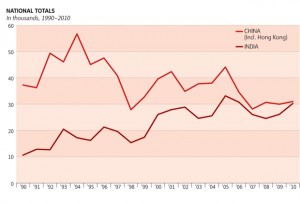
Source: Globe and Mail
The Debate Over Northern Gateway

A tongue-in-cheek piece in the Globe and Mail this weekend may prove prescient on the on-going boisterous debate over the proposed Northern Gateway pipeline. The fiction describes a post 2015 Canada following yet another election victory by Stephen Harper that is facing difficult times. Though approved, the pipeline was given a negative environmental assessment and faces innumerable construction delays due to continued protests. Not surprisingly, Chinese enterprises, major stakeholders in the project, are not amused.
Public hearings on the pipeline began last January before the National Energy Board’s Joint Review Panel with the Canadian Environmental Assessment Agency. Crisscrossing 22 Alberta and BC communities, the panel COULD issue its final go-ahead by the end of 2013! Apparently, the schedule was extended by a whole year because more than 4,000 people had registered to make their views heard. A Vancouver Sun reporter opined that BC was not afraid of megaproject controversy for “the bigger the project, the larger and more long term the potential consequences, the more scrutiny any proposal deserves…”.
The environmental lobby claims the pipeline is too dangerous, crossing three fault lines and vulnerable to frequent landslides and other natural disasters. In addition, they claim the diluted bitumen is more corrosive than conventional oil and marked increases in tanker traffic in the Douglas Channel could lead to catastrophe oil spills. Meanwhile, an alliance of BC First Nations groups left on a cross-Canada tour this month, on board a VIA Rail ‘Freedom Train’, to protest Enbridge’s plans. A recent poll indicates that BC opposition to the project has steadily grown over the past few months since the start of the proceedings.
Interviewed by the Financial Post, CIBC Vice-Chairman Jim Prentice suggests that Canada may be talking itself out of multi-billion dollar foreign investments if the debate over energy infrastructure projects such as Northern Gateway drags out too long. “The international investment community [is] not interested in the debate. What they are interested in is investment certainty. And if you cannot provide them with the required certainty on issues [such as regulations and dealing with First Nations] it’s just as easy to build [elsewhere]”, he warned.
Inordinate attention may or may not be a bad thing, but what is certainly disturbing is the amount of ideological abuse being directed at Chinese investment in Canada. Elizabeth May, leader of the Green Party, heaved vitriol at Chinese state corporations, insinuating that the Chinese Communist Party, through its corporate arms, could dictate terms against Canada’s national Interests. Cited in the Financial Post, Ms May ranted: “What would happen if Syncrude were to decide they would do better putting a refinery here and selling their crude as a finished product? China [Sinopec] could say, ‘No, we veto that, we want it in China’”.
Don’t know if Ms May is aware that Sinopec owns a mere 9% stake in Syncrude, hardly enough to ‘veto’ any major investment decisions of an independent Canadian company. More important, she should remember that all foreign companies operating in Canada, including Chinese, whether state-owned or private, must abide by Canadian laws relating to corporate, environmental, and labour issues.
Chinese companies have sunk billions of dollars in Alberta’s oil sands and understandably they want something to accrue from that like making a profit. At an energy conference held in Calgary last week, Junsai Zhang, China’s ambassador to Canada, questioned singling out China as the bad guy: “[Your] government said that you want to diversity your [markets] and said it welcomes exports to China…I don’t know why [some Canadians] say they don’t want to export to China. I don’t know what is the basis for this.”
He reminded reporters that Canadian energy is NOT indispensible to China, as many Canadians assume, noting that China only imports a miniscule amount of spot oil from Canada. “It’s too early to say China imports your oil and gas. We are in a very good collaboration with Australia, with other Western countries. No problems. If we don’t import from here, we import from other countries. It’s OK”, he said.
In the same breath, he emphasized that Chinese companies are in Canada to do business, regardless of whether oil gets shipped back to China. “[Chinese companies] come here to participate…If there’s opportunity, [they] will take some shares [and] learn…the management practices and the way to manage regulations…they want to prove that they are the guys who abide by the regulations, by the local laws, and by the practices that already exist. They try to be part of the citizenship, a part of the community, and so far so good.”, he said.
As the Chinese ambassador’s remarks were still reverberating in Canadian ears, the President of Columbia Juan Manuel Santos landed in Beijing this week to pitch a pipeline that would run from Venezuela’s oilfields to Columbia’s Pacific coast, facilitating quicker shipments to China. Mr Santos further disclosed that there is considerable Chinese interest in building a railway linking the rich Llanos Orientales oilfields in eastern Columbia (along with Venezuelan) to the Pacific.
Enough said about the debate. In my next post, I will focus on the significance of Northern Gateway for both Canada and China.
Attracting the Best and Brightest
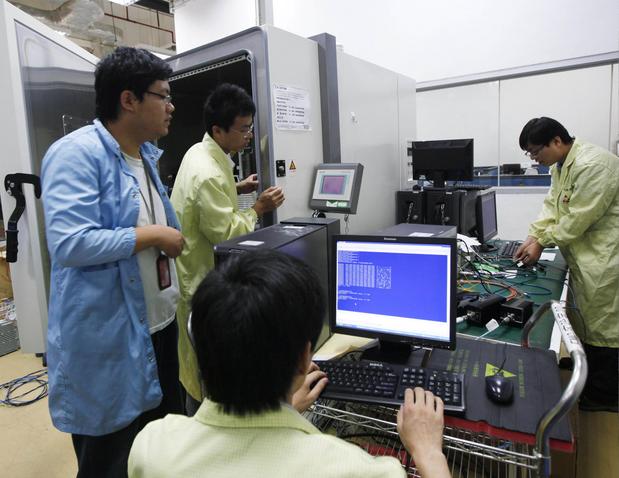
Canada must be more aggressive and proactive if it wants to maintain its envied spot in the global race to attract the best and brightest immigrants, especially from China, India, and other emerging countries, the Globe and Mail editorialized last week. Backed by an in-depth report on Canada’s immigration policy reform, it warned that the competition for talent is heating up as countries like Australia are fast-tracking permanent residence for the best candidates.
“People with options are less and less likely to tolerate hidebound and cumbersome immigration process, waiting as long as 8 years to have their applications processed”, the Globe and Mail opined, noting as well that the Chinese and Indian governments are using tax and visa incentives to draw highly-educated ex-pats back to their homelands. Nonetheless, an extensive world-wide Gallop poll showed that Canada remained the third most popular destination for would-be immigrants, behind the US and the UK.
The newspaper lauded the Tory government for initiating long-overdue reforms such as restructuring the immigrant investor program, providing bonus points for educated applicants with English language proficiency and pre-arranged jobs, expanding the provincial-nominee program, and shifting the responsibility of assessing applicants’ merits from the government to the companies hiring them. The government is also seeking to clear the backlog of applications by closing some 100,000 cases.
But, this isn’t enough, the Globe emphasized. Canadian immigration officers should be actively ‘headhunting’ high-educated and entrepreneurially-minded people with in-demand job skills as well as swinging the doors open to take advantage of global downturns that have lead to unemployment woes in other parts of the world, notably southern Europe. In addition, Ottawa should be doing more to address discrimination in the work place and gate-keeping by professional organizations so that newcomers with foreign credentials and work experience are better able to find suitable jobs.
Currently, Canada accepts about 150,000 economic immigrants (out of a total of 250,000) a year but many experts and politicians would like to see the figure rise dramatically. Should economic immigration double to 300,000, contends the Globe, with other categories remaining constant, total immigration could increase to more than 1% of population or around 400,000. In longer economic terms, over the next decade, with an expected one million job vacancies across Canada and a net negative organic fertility rate, Canada will require even more immigrants. Based on present projections, by 2031, immigration could grow to 500,000 a year, doubling the total today.
A 2010 Canadian International Council (CIC) study on Chinese emigration from the PRC to Canada found that since the mid-1990s Chinese immigrants have been predominately well-educated and in higher proportion than from other source countries. In several years between 1999 and 2005, Chinese immigrants holding a university degree accounted for about 20% of all immigrants with degrees while Chinese immigrants were only 16% of all immigrants admitted.
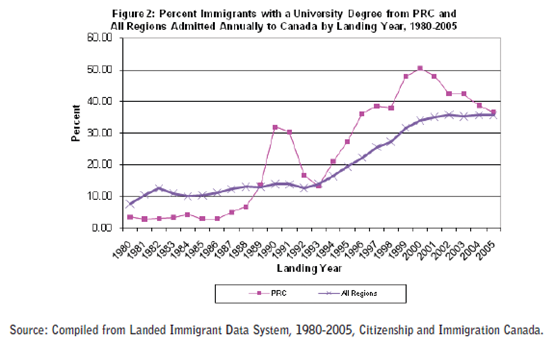
Looking into the future, and dovetailing with the observations of the Globe, the CIC study sees Canada’s falling fertility rate, the growing importance of a knowledge-based economy, growing dependence on international migration and highly-educated immigration, and the continued generation of a surplus of university graduates in the PRC, as trends that will ensure China as a major source of highly-trained immigrants for Canada.
But, the report also observes that as China’s economy’s grows in breadth and sophistication, many would-be immigrants along with those who have already emigrated, will be attracted back to China in search of better returns for their educational credentials and job skills. (Of the more than 1.92 million Chinese scholars and students who have travelled abroad to deepen their studies and research since the advent of the reform era, roughly 1/3 or 630,000 have returned to the mainland.)
In fact, the reverse brain-drain is gathering momentum. A survey last year on the motivations of Chinese and Indian returnees conducted by Vivek Wadhwa, a researcher at the Harvard Law School and Duke University, found that 90% of Chinese and 60% of Indian returnees named economic opportunities in their countries as a major factor in their decision to return. While majorities in both countries desired to contribute to their country’s economic development, some Chinese respondents said government incentives and preferential policies were important.
Chinese and Indian returnees (53% and 55% respectively) were very optimistic about economic growth prospects in their countries with the Chinese more than Indians considering government support for their fledgling businesses very important. Perhaps surprising to Westerners, 81% of Chinese and 72% of Indians felt that opportunities to start their own businesses were BETTER in their homeland than in the US. Moreover, the speed of professional growth was faster and the quality of life better or at least equal to what they had enjoyed in America.
The CIC report concludes: “the competition for skilled immigrants in the world market is likely to increase as developing countries raise their economic output and reduce the disparity with developed countries and demographic pressures increase in the advanced industrialized world. Under this scenario, countries which can maintain a competitive level of remuneration as well as an enlightened policy of multiculturalism and immigrant integration will be in a better position to attract and to retain skilled immigrants…But, as the shortage of skilled immigrants increases, brain drain may become multi-directional as immigrants well endowed in human capital may be able to circulate in various regions of the world market.”
The global ‘hunt’ for international talent is afoot and Canada must be wise and nimble in sculpting its immigration policies to stay ahead.
A Blind Activist and China’s One-Child Policy
Finally, a possible face-saving compromise for the two superpowers may be at hand to resolve the case of Mr Chen Guangcheng, the blind abortion activist from rural Shandong. Mr Chen, aided by US-backed sympathizers, ‘daringly escaped’ from captivity into the US Embassy and then flip-flopped on whether he would stay or seek asylum in the US. Mr Chen managed to singlehandedly hijack Tim Geithner and Hillary Clinton’s meetings with senior Chinese leaders at the all-important 4th Strategic and Economic Dialogue (SED) talks in Beijing that just concluded.
The Chinese government announced that Mr Chen could apply to study in the US and would process his travel documents accordingly as well as making accommodations for his medical condition. The US State Department confirmed that Mr Chen has been offered a fellowship from an American university where he could be joined by his wife and children. Read: asylum granted.
Whew! What a relief! But, on top of dousing the fire of the SED, the diplomatic faux pas once again put China’s ‘draconian’ one-child policy under the international spotlight, drawing the ire of Western commentators, columnists and editors. Lest more people get hot under the collar, we should get some basic facts straight and put the policy in perspective.
Formerly lauded for his work on rights for the disabled, Mr Chen crossed the authorities in Linyi, Shandong, when he started exposing egregious abuses in the city’s enforcement of one-child policies, including forced sterilizations and abortions. Violations by local officials, which occur across China, contravene a 2002 national law banning the use of physical force to enforce compliance. Faced with contempt for the policy, jurisdictions often resort to drastic actions in imposing strict quotas.

The policy is strongly enforced for the Han in urban areas unless both parents are themselves single children, or if their first child has a physical or mental disability. However, in the countryside, a second child is allowed if the first is a girl, a bonus concession in light of the traditional bias toward boys that pervade among the peasantry. However, in the remote countryside, it is not uncommon to find families with 3 or 4 unregistered children. Further, as part of its affirmative action policies for national minorities, non-Han groups are exempted from Han restrictions, allowing them to bear 2 children in the cities and 3-4 in the countryside.
For rule-abiding parents, a monthly stipend is provided along with extra pension benefits, preferential hospital treatment and housing benefits, preferred consideration for government jobs, and even bonus points for their children in taking middle school entrance exams. The authorities monitor young families closely and often use communal pressure, notwithstanding the abuses uncovered by Mr Chen.
For those who violate the law, in many provinces, fines, sometimes several times the annual net family income, are meted out. However, in spite of the heavy penalties, rich Chinese continue to flaunt the policy, such the case of a Guangdong couple that paid almost 1 million RMB to have 8 children through surrogacy, arousing much disgust and condemnation on the Internet.
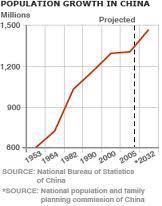
Following the introduction of the one-child policy in 1979, China’s fertility rate has fallen from over 3 births per woman in 1980 to approximately 1.54 in 2011. Based on the latest census, China’s population has reached 1.35 billion and is projected to peak around 2030, leading critics to declare that the policy has exacerbated the rapid aging of society. By contrast, in India which is facing a demographic explosion and whose population is expected to surpass China’s by 2025, the fertility rate remains high at 2.64 births per woman (another study puts the figure as high as at 2.9).
In 2008, the Chinese government estimated that had it not been for the policy, there would be 300 to 400 million more people, putting immense pressures on the food supply, resources, public health, education, pollution, and social services. Other experts add that trends attributed to modernization such as lower rates of infant mortality, wide availability of contraception, and greater participation of women in the workplace have contributed to fertility declines. Moreover, younger women in Shanghai, Beijing and other major urban centers, as they become richer and more educated, are marrying later and opting to have fewer children, just like their counterparts in developed countries.
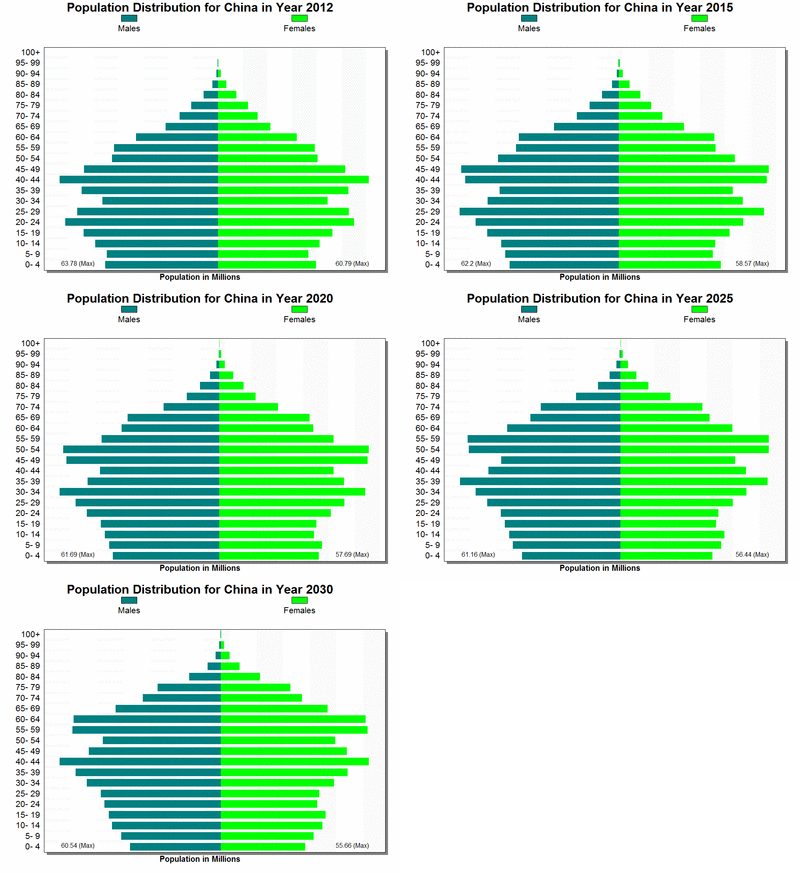
Many experts contend that the one-child policy has heavily skewed the birth sex ratio on the mainland vastly in favour of males, reaching as high as 117:100 in 2000, substantially higher than the natural baseline ranging from 103 to 107:100. As a result, by 2020, estimates China’s National Population and Family Planning Commission, there could be 30 million more men than women, potentially leading to social instability and heightened foreign bride-seeking. Other parts of East Asia have exhibited similar patterns with South Korea reaching 116:100 in the 1990s although the figure has dropped to normal levels since the mid 2000s.
Should/will China relax its one-child policy, given demographic changes it has helped to engender and abuses caused in its implementation?
There are frequent calls to tinker with the system such as last summer’s appeal in Guangdong to allow a second child for urbanites, following precedents in Shanghai permitting a second child for single-children parents, but Beijing’s family planning authorities have consistently upheld the status quo. China’s surging urbanization, some 15 – 17 million new city-dwellers a year over the next 20 years, will ensure that the policy stays intact in its basic form. Only when palpably negative effects on economic development are felt will central authorities do a fundamental re-think.
Fighting Corruption in China

‘Heimaojingzhang’ (Captain Black Cat), a popular Chinese TV cartoon series of the 1990s and 2000s.
Anti-corruption is nothing new to China. Soon after the establishment of the PRC, Chairman Mao executed one of his closest comrades for taking what amounts to a pittance of the hauls taken in today. Mao’s crusade against officialdom rose to a crescendo during the Cultural Revolution when hundreds of thousands of officials, mostly unjustly, were sent down to factory floors and the countryside for re-education by worker-peasants.
China’s economic reforms, particularly since the 1990s, have ushered an era of escalating corruption unseen in previous decades, forcing the authorities to introduce a plethora of laws and launching innumerable campaigns to combat the blight. Since the early 2000s, disciplinary authorities of the Communist Party of China (CPC) have issued all sorts of decrees, codes of conduct, and asset disclosure requirements for its officials and their families.
The central government had also made plans to introduce ‘sunshine’ legislation, some modeled after US precedents, for senior cadre to publicize their wealth, encouraging local authorities to do the same, albeit to limited effect. The most impressive policies for disclosure were passed in Baimiao Township of Bazhong City, Sichuan Province in 2010. There, government revenues and expenditures as well as the salaries and benefits of incumbent and retired officials were fully disclosed on local government websites.
However, resistance to anti-corruption measures remains strong in a country where whistle-blowing goes against the grain of tradition. ‘Sunshine’ policies expose the system’s underbelly and ‘qianguize’ (hidden rules) that prevail among officialdom and business circles perpetuating opaque governance and facilitating corrupt practices. In Baimiao, for instance, after the disclosure policies were announced, government operations were virtually boycotted by higher-level authorities with city departments reluctant to help out with Baimiao’s infrastructure projects.
In the late 1990s, the hard-nosed and incorruptible Premier Zhu Rongji cracked down hard on high-profile corruption cases leading, among others, to the arrest warrant for Mr Lai Changxing, the mastermind of the multi-billion dollar Xiamen (Fujian Province) smuggling ring that implicated hundreds of central and provincial officials. Mr Lai managed to escape to Canada where he languished for over a decade in the Canadian court system, eventually exhausting his legal avenues and being extradited back to China where he is currently facing formal sentencing.
Despite repeated calls by President Hu Jintao and Premier Wen Jiabao to intensify anti-corruption efforts and improve intra-Party supervision, not to mention the establishment of an anti-corruption database and network, China’s anti-corruption record has fallen far short of rhetoric. In addition to the lack of an independent judiciary and a free press, there is no truly autonomous anti-graft agency along the lines of Hong Kong’s Independent Commission Against Corruption (ICAC).
“The Communist Party can mobilize human and financial resources to (suppress corruption)”, explained Liao Ran, the new Program Officer for China and South Asia at Transparency International to the New York Times last year. At the same time, because government officials are involved, even though corruption is very serious, it is ‘under control’, he added paradoxically. In 2010, the CPC’s Central Commission for Discipline Inspection, the Party’s anti-corruption arm, investigated nearly 140,000 cases of malfeasance, punishing over 146,000 persons, of which 5,373 cases have been referred to the courts for criminal prosecution.
The advent of the Internet and blogging in China has at times helped the fight against corruption. In the past few years, for good or bad, the phenomenon of ‘human flesh search engines’, operated by online sleuths and vigilantes, have tracked suspected wrongdoers, using databases, search engines, photo and video analysis, social networking sites, and even blatant hacking. Most damaging has been the online postings of video and photos exposing the abuses of corrupt officials and businessmen.
Last year, public relations consultant Chen Hong launched a website, www.ibribery.com, that allowed netizens to anonymously post their experiences with bribe-taking officials. The site drew 200,000 visitors within two weeks of its launching but censors shut down access to the site for people inside China soon after. Other netizens have set up copycat sites such as www.522phone.com and www.wohuixingle.info, vowing to carry on the fight. Last reported, Mr Chen was applying for a license to operate on the mainland and working with others to improve the site while it is offline. (Current status of application is not known.)
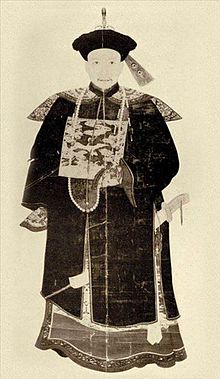
The infamous He Sen (1750-1799), Minister of the Treasury and Prime Minister in the court of Qing Emperor Qianlong who amassed 800 million taels of silver, equivalent to 10 years of government revenue. After his arrest, the Emperor sentenced him to death by self-hanging.
Corruption has a long dynastic legacy in China and one need only review the chronicles of the Qing Dynasty and earlier empires to see the complex system of interests that contributed to the disease. But, one aspect of traditional Chinese governance adds directly to its perpetuation and growth – the Confucianist preference for ‘renzhi’ (governance by virtuous officials) over the rule of law (as initially codified by the Legalist School) that puts weight on fostering the moral integrity of officials while repudiating wealth-seeking. Whereas moral righteousness is an ideal principle, it fails to stem corruption in the real world of government and business.
In many ways, the CPC carries on this tradition. Despite the proliferation of rules and regulations and laws against corruption, the CPC persists in putting priority on government by trusted officials over the institutionalization of safeguards and systems of punishment. Its focus on the cultivation of honorable officials is quintessentially Confucianist.
How Bad is China’s Corruption Anyway?
When it comes to China coverage, the Western (Canadian) press loves to accentuate the negative or overstate the evils to discredit China without any reference to how the government and society at large are trying to tackle the scourge. Last weekend, the National Post featured an ‘analysis’ of China’s corruption in connection to the on-going murder-plot investigation of former Chongqing Party Chief Bo Xilai and his immediate family.
Using disparaging terms like ‘surging’, ‘pervasive’, and ‘endemic’, the article sensationally describes a country inundated by graft, jobbery, bribery, extortion and other abuses from top to bottom. It paints a picture of the kind of ‘in-your-face’ corruption that prevails in many parts of Africa, Asia, Eastern Europe and Russia, and Latin America.
China’s corruption is indeed serious, condemned by none other than Premier Wen Jiabao. During his press conference ending the annual National People’s Congress session in late March, he warned that failure to act effectively against graft and income disparity could rekindle the tumultuous struggles of Chairman Mao’s Cultural Revolution that wreaked havoc on Chinese society for over a decade. The State Council website quoted the Premier as saying: “the greatest danger facing the ruling party is corruption…If this issue is not resolved, the nature of political power could change.”
But, how bad is China’s corruption really, compared internationally, noting that China is the world’s most populous nation still undergoing crucial stages of development and that 34 years ago was a Maoist cul de sac and economic wasteland. Systematic international comparisons of corruption are hard to come by but Transparency International’s (www.transparency .org) annual Corruption Perceptions Index makes a gallant effort. In its 2011 ranking of 183 countries, New Zealand came out on top with a score of 9.5 followed by several Scandinavian countries with North Korea and Somalia placing dead last (the higher the score, the higher the level of public-sector cleanliness).
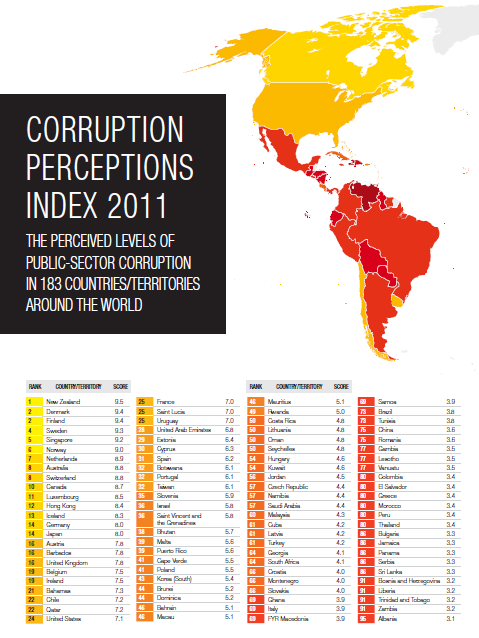
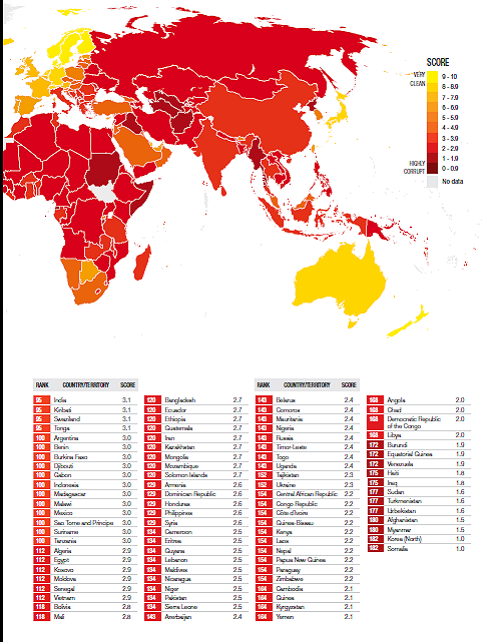
How did China fair in the ranking? Well, it landed somewhere in the middle, coming in 75th, with a score of 3.6, on par with Romania and closely behind Brazil (73, 3.8). Significantly, it wasn’t far behind Italy, a developed and Europe’s third largest economy (69, 3.9) and 10+ places back of emerging markets Turkey (61, 4.2) and South Africa (64, 4.1). In Greater China and Sinic (Chinese influenced) countries and regions, Singapore ranked highest (5, 9.2), followed by Hong Kong (12, 8.4), Taiwan (32, 6.1) and Macau (46, 5.1) while in East Asia, Japan reached 14th with 8.0 and South Korea 43rd with 5.4. Canada placed a very high 10th with 8.7, far ahead of the US (24, 7.1).
Most interestingly, however, is the ranking of China vis a vis India, touted by itself and the West as a vibrant democracy with an active civil society, well-functioning courts, and the rule of law. A comparison with India is more apt since the two countries are both at early stages of development with China ahead in reforms. While China’s score is nothing to brag about, India placed a full 20 spots behind China at 95th with a score of 3.1, in line with Albania, Kiribati, Swaziland, and Tonga. More important, India slipped 23 spots from its 2007 ranking when it shared the 72nd spot with Brazil, China, Mexico and others with a score of 3.5. So, while China slipped 3 places over the last 4 years, its score actually rose by 0.1 while India’s dropped by 0.4.
Even Sri Lanka faired better than India with a 86th placing and score of 3.3 and expectedly, Bangladesh and Pakistan ranked far worse with 120, 2.7 and 134, 2.5 respectively. In Indochina and Southeast Asia, with the exception of Malaysia (60, 4.3), rankings were invariably low: Thailand (80, 3.4), Indonesia (100, 3.0), Vietnam (112, 2.9), Philippines (129, 2.6), Laos (154, 2.2), Cambodia (164, 2.1), and Myanmar (180, 1.5), third from last.
Rukshana Nanayakkara, Transparency International’s Senior Program Coordinator for South Asia remarked that the performance of China and India showed much less efficacy in combating corruption as compared to developed countries. “In China, greater economic freedom has failed to bring along a framework that hinders corruption…(and) although India boasts a larger democratic space of public activism in countering corruption and opacity, little commitment has been delivered on the government’s part for substantive eradication”, Mr Nanayakkara wrote on the Transparency International website.
In my next post, I will take a closer look at how the Chinese authorities are dealing with the affliction and obstacles in their way along with efforts by civil society to expose the seedy side of Chinese government and society through the use of the Internet.
Canadian Agri-food’s Future in China
If Canadian agriculture doesn’t get its act together, its current status let alone growth in the booming Asian, and in particular, Chinese market, could fade, warned a recent paper from the Canadian Council of Chief Executives, a Ottawa based pro-trade group linked to the Liberal Party.
“Golden Opportunities and Surmountable Challenges: Prospects for Canadian Agriculture in Asia, penned by Michael Gifford, Canada’s former chief agricultural trade negotiator, notes that rising incomes, rapid urbanization, and growing populations in Asia are the main drivers behind spiking world agri-food demand in which China stands to become the single largest importer within the decade.
Shifting away from its export-led model to one based more on domestic demand, China (along with India and Indonesia) is climbing up the food ladder, consuming greater amounts of meats, fats, oils, and fruits. Not only does this bode well for global ‘rebalancing’ but creates abundant room for Canadian farmers and agribusiness to expand their presence.
With mounting strains on arable land and water resources, China increasingly relies on imports of feed grains and oilseeds, crops that Canadians excel at producing. Over the 2006-2010 period, Mr Gifford writes, Canada improved its share of the Chinese import market from 3% to 4-5% due to exports of oilseeds, primarily rapeseed/canola and canola oil, that accounted for roughly 3/4 of all Chinese agricultural imports.
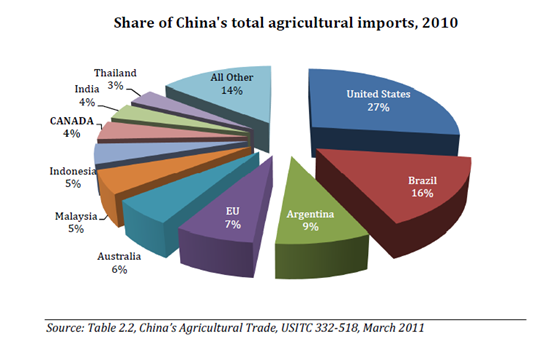
Reproduced from “Golden Opportunities and Surmountable Challenges”
Canada exports 90% of its oilseed crop which explains why canola production in the Prairie provinces has replaced wheat as the most valuable and the main reason why Canada is keeping pace in China agri-food trade. Wheat, on the other hand, has faired poorly in recent years. From 60% of wheat exports to China in the 1960s, Canadian exports there plummeted to zero in 2008 and to less than $150 million in 2010. Canada’s total food and agricultural exports to China nearly topped $3 billion that year.
Whether Canada will be successful in maintaining and growing its share of China’s agri-food import market depends not only on China’s agricultural policies that put heavy emphasis on self-sufficiency, but just as importantly, on future international trade agreements. China has already signed a number of free trade agreements with ASEAN, south Asia countries, and significantly for Canada and other Western exporters, with New Zealand. The agreement, signed 4 years ago, the first with a Western nation, provides preferred trading status in dozens of goods and services as well as eventual duty-free access for New Zealand dairy products.
Of much greater concern to Canada would be an agreement between Australia and China since Australia is a direct competitor on a number of agricultural fronts. Negotiations toward a pact are currently deadlocked but should the kinks be hammered out, preferential access for the Australians would come at the cost of Canadian grain, oilseed, and meat exports.
Prospects for a free trade deal between Canada and China were raised in a joint statement during Prime Minister Harper’s visit to China last February that committed the two countries to completing a joint economic study by May. But, speaking to the press, Trade Minister Ed Fast remarked that Canada was taking things one step at a time. “We’re not going to get ahead of ourselves…Our end game is to deepen our trade relationship in one of our key priority markets.”
Mr Gifford argued that the agricultural sector would further miss out if the federal and provincial governments remain paralyzed from allowing limited trade liberalization in certain import-sensitive industries, notably, poultry and dairy products. ‘Supply-management’ protection for milk and eggs, for instance, has become a major area of contention in Canadian talks to join the US initiated Trans-Pacific Partnership (TPP). The Harper government has pledged continued support for the status-quo in a bid to appease Quebec where Canada’s dairy industry is based, but privately, some officials have suggested room for compromise for the sake of TPP.
Mr Gifford concludes: “If Canadian agricultural producers are to maximize their export potential in Asia, they cannot allow themselves to be placed at a comparative disadvantage compared to other exporters. The most urgent trade policy challenge, therefore, is to ensure that Canada is not locked out of preferential trade agreements that will increasingly shape the future of trade in the Asia Pacific region….The rise of China, India, and other emerging markets has dramatically changed the outlook for Canadian farmers and agricultural producers.”
Canadians are pro trade
This poll dovetails with the thrust of my last post.
Human rights take a back seat to trade: poll
But on the issue of shipping oil to China through B.C. ports, Western Canadians are divided
By Peter O’Neil, Vancouver Sun April 23, 2012 2:05 AM
Canadians are becoming less concerned about human rights in China as they increasingly view the booming Asia-Pacific region as a crucial driver of Canada’s future economic success, according to a survey to be released today.
But a Western Canada consensus on the importance of the Asia-Pacific falls apart over proposals to ship oil via pipelines to Asia-bound supertankers docking in B.C., according to the poll of 3,129 Canadians done for the Asia-Pacific Foundation of Canada.
Indeed, 62 per cent of respondents don’t believe major pipelines should go ahead if affected first nations are opposed.
“Canadians’ support for the promotion of human rights and democracy in Asia seems to be taking a back seat to the potential for economic gain,” concludes a summary of the poll.
The Vancouver-based Asia-Pacific Foundation found Albertans’ enthusiasm for expanded trade with Asia includes 60 per cent in favour (compared to 29 per cent opposed) for having Asia-bound tankers transport oil from B.C. ports. By contrast, respondents in B.C., while enthusiastic about expanded Canada-Asia trade, opposed by 56 per cent proposed tanker traffic off B.C.
When asked if the potential risks of transporting oil and gas to Asia from B.C. outweigh the benefits, 55 per cent of British Columbians polled agreed, while 37 per cent disagreed. The results were reversed in Alberta, with 51 per cent of respondents rejecting the notion that the risks outweigh the benefits.
Nationally, Canadians are sending mixed signals. While 53 per cent of respondents support pipelines to get oil to Asia via B.C. ports, 47 per cent said the risks of getting crude to Asia outweigh the benefits.
Two Calgary companies, Enbridge Inc. and Kinder Morgan, are seeking National Energy Board approval for pipelines to get Alberta oil to West Coast ports – Enbridge via Kitimat and Kinder Morgan through a twinning and expansion of the existing Trans Mountain line to its Westridge port facility in Burnaby.
The online poll was done in late February by Angus Reid Public Opinion and has a margin of error of 1.8 percentage points. The error margins for provinces are higher due to smaller sample sizes.
The poll suggests that roughly two-thirds of Canadians believe it’s possible to promote business in China while still raising human rights issues, while the percentage of respondents who believe Ottawa should put human rights promotion at the top of its policy agenda – 45 per cent – is down a full 10 points from a year ago.
It’s All About Trade and Investment
Last week, journalist Terry Gavin of the Ottawa Citizen broadsided the Harper government for entwining Canada’s economic future with the Chinese economic juggernaut. Resorting to crass China name-calling, he said the Canadian foreign policy establishment has been “wholly unencumbered by scruple in its intimacies with Beijing”.
He took jabs at the Department of Foreign Affairs and International Trade (DFAIT) and former key mandarins, the Canada-China Business Council (CCBC), and the Asia-Pacific Foundation of Canada, not to mention Canadian investment and law firms that do business in China and Chinese conglomerates in Canada.
He also asked why the 2009 Investment Canada Act regulations had omitted a proposed definition of ‘national security’ and distinctions between state-owned companies (SOEs) and ordinary foreign investors in connection with attempted acquisitions of Noranda and Falconbridge by Chinese companies.
He basically questioned whether “hitching the horses of Chinese capital and Chinese markets to the harnesses of Harper’s plans for the supercharged development of Canada’s oil, gas and coal reserves” jived with Canadian political values.
Meanwhile, on the side of the country, Yuen Pau Woo, President and CEO of the Asia-Pacific Foundation, writing in the Vancouver Sun, called for even closer ties between Canada and Asia, a major component of which is Canada-China relations. He remarked that Canada’s market share in Asia is below potential and the Harper government is playing catch-up (after languishing for years due to its ideological proclivities). He urged the government to go farther and develop a ‘leap-frog’ strategy for Canada to become the most Asia-engaged country in the Western world.
Leap-frogging would entail a huge commitment from all levels of government to educate and train Canadians to be effective in an increasingly Asia-centric world, he said. In terms of human ties, Canada is already the most Asia-connected country but the federal government’s Asia Pacific Gateway and Corridors Initiative (APGCI) sets the stage for Vancouver to become the premier hub for Asian shipping to North America as well as the center for trans-Pacific business, governmental and cultural linkages. The current game-changer is energy exports that could lead to the creation of a trans-Pacific energy market, Mr Woo emphasized.
Last year, according to a survey by Industry Canada, Canada-China bilateral trade reached a record $65 billion. China vaulted past Japan into third place behind the US and the UK, taking in $16.8 billion in Canadian exports. The US remains by far the biggest importer of Canada products but its share has shrunken from over 87% a decade ago to 73.7% today. China’s share of Canadian exports is still a fraction of the US’s at 3.7% but exports going there have more than tripled. While Canada’s trade deficit with China remains large, it has leveled off and in fact dipped slightly in 2011.
British Columbia lumber exports have surged from virtually nothing in 2002 to near 28% of the total in 2011, exceeding $1 billion from a paltry $33 million. Exports south of the border dropped precipitously from $4.84 billion to $1.66 billion, due largely to the depressed US housing market. Canadian trade economists believe that China will continue to have a large appetite for Canadian natural resources, especially coal, potash, and grain along with oil and gas in the coming years.
China’s foreign direct investment (FDI) in Canada currently stands at $14.1 billion, with the lion’s share in natural resources. Last January, PetroChina became the first Chinese company to take a stake in Alberta’s oilsands, buying up Athabasca Oil Sands Corp.’s remaining stake in the MacKay River project, one of the newest developments in northern Alberta.
A Canadian Press-Harris Decima poll released during Prime Minister Harper’s visit to China back in February indicated that 9 out of 10 Canadians felt Canada-China relations is important. In terms of Chinese investment in Canada, a majority (51%) of Canadians welcome it but at the same time, many (71%) were wary of Chinese companies controlling Canadian-owned or operated companies.
Increased trade and investment flows are essential for both countries. China’s GDP is expected to grow by over 8% this year and hover around that figure for the foreseeable future, ensuring continued hikes in Canadian exports. Chinese investment abroad helps to address global imbalances that Western governments and economist have been calling for.
So, Mr Gavin, it’s all about trade and investment.
Foxconn problems and remedies
2010-2011 have been calamitous years for Foxconn in the area of labour relations. Of the 23 suicide attempts that occurred on the premises of the massive Foxconn City industrial park, 18 involved workers jumping from buildings claiming 14 young lives. The suicides caught the eye of the domestic and international media along with strong expressions of concern from local and central government, resulting in a number of unprecedented investigations launched by Foxconn’s customers.
While the suicides were tragic, they constituted a tiny fraction of Foxconn’s approximately 1 million workforce, with the suicide rate at about 1.5 per 100,000, well below the national average. Soon after the initial suicides in 2010, the Economist magazine readily came to Foxconn’s defense: “Conditions at the firm are actually not that bad compared with many others, says Boy Luthje of the Institute of Social Research in Frankfurt…In response to the suicides, the company is said to have surrounded buildings with nets, hired counselors, brought in Buddhist monks to pray and toyed with asking employees to sign a ‘no suicide’ pledge…”
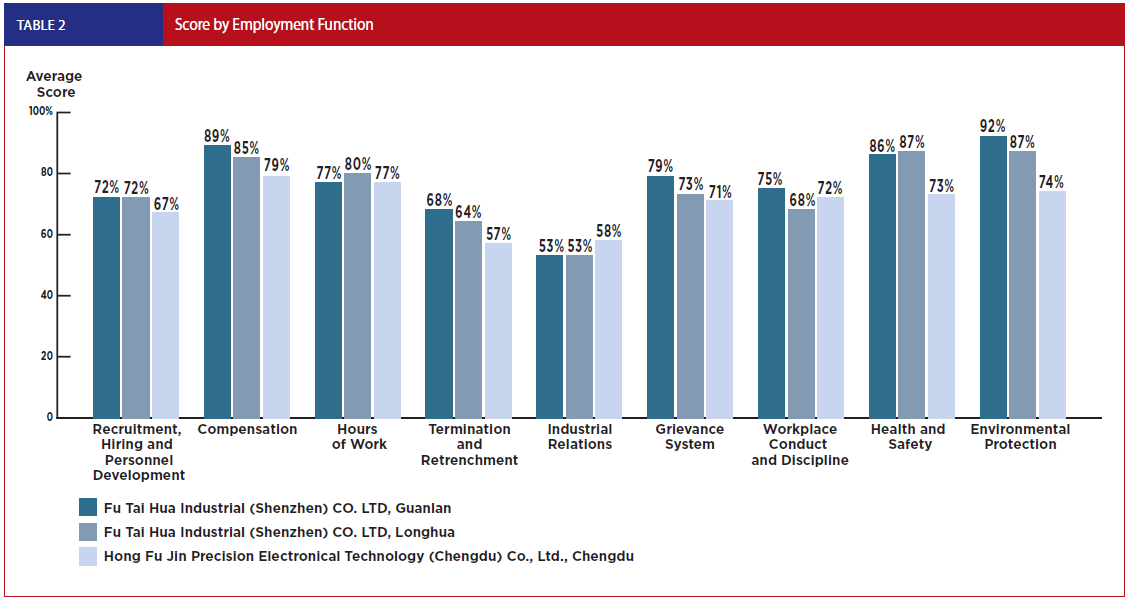
But a lengthy report (involving interviews with 1800+ workers from Foxconn factories in 9 Chinese cities) compiled jointly by 20 Hong Kong, Taiwan, and the Mainland universities in late 2010, reproached the Taiwanese company for its Spartan (militaristic) management style, extensive hiring of teenage students, and failure to report numerous industrial injuries with little compensation meted out.
Workers were forced to work 80-100 hours of overtime a month, well above the legal limit of 36 hours. Many teenage vocational students worked without contracts or insurance and received paltry salaries beyond free room and board, resulting in turnover rates of 30-40% annually.
 |
|
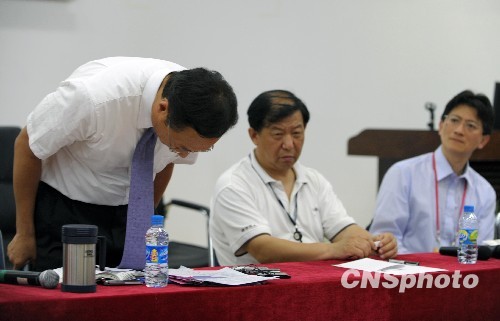
| On May 26, 2010 Terry Guo attended a cross-Taiwan Straits psychological and sociological research forum. Here he bows in apology.http://news.sina.com.cn/c/2010-05-26/200417567843s.shtml |
‘Quotations’ of President Terry Guo on the stairwell of a Foxconn building; the first one reads: “Mistakes are not frightening; what’s frightening is making the same mistake”. Source:http://www.hkcd.com.hk/content/2010-05/27/content_2530993.htm |

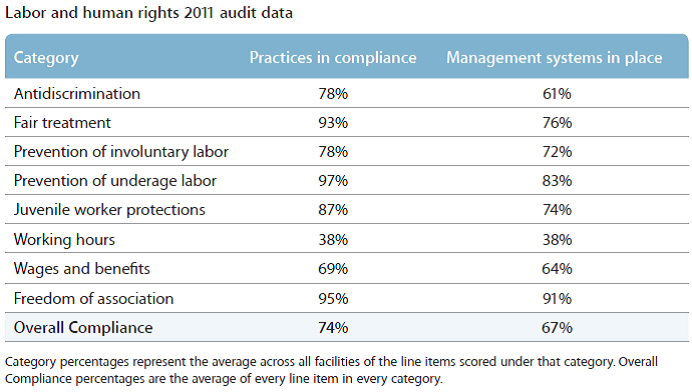
In response to the severity of the accusations, Apple released the results of its 2011 audits of contractor factories in its Supplier Responsibility 2012 Progress Report, the highlights of which appear below:
- In 2011, Apple conducted 229 audits throughout our supply chain — an 80 percent increase over 2010 — including more than 100 first-time audits.
- Apple-designed training programs have educated more than one million supply chain employees about local laws, their rights as workers, occupational health and safety, and Apple’s Supplier Code of Conduct.
- Apple’s audits have always checked for compliance with environmental standards. In 2011, in addition to our standard audits, Apple launched a specialized auditing program to address environmental concerns about certain suppliers in China. Apple uncovered some violations and worked with our suppliers to correct the issues. Apple will expand our environmental auditing program in the coming year.
- Apple has a zero-tolerance policy for underage labor, and Apple believes their system is the toughest in the electronics industry and has broadened our age verification program. Cases of underage labor were down significantly, and our audits found no underage workers at their final assembly suppliers.
- Apple offers continuing education opportunities at our suppliers’ facilities free of charge. More than 60,000 workers have enrolled in classes to study business and entrepreneurship, improve their computer skills, or learn English. And the curriculum continues to expand.
 |
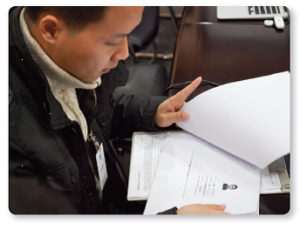 |
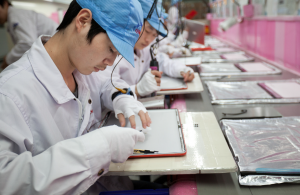
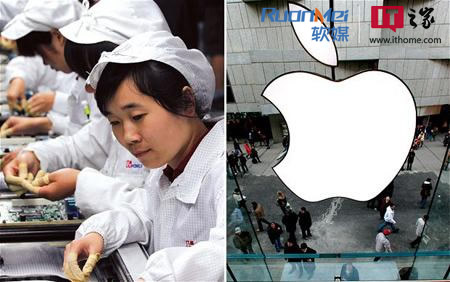
| Workers at an Apple supplier facility in Shanghai assemble parts for the MacBook Pro. | An independent auditor checks ID and other documents to verify the age and status of workers at a facility in Shanghai. Suppliers are required to maintain all relevant documentation and produce it during audits. |
In addition, last February, Apple commissioned a probe by the independent Fair Labor Association (FLA) in a bid to further quell intense criticism of supplier practices. FLA anonymously surveyed over 35,000 randomly-selected Foxconn workers to find excessive overtime and overtime compensation lapses, health and safety risks and crucial communication gaps “that have led to a widespread sense of unsafe working conditions among workers”, said the FLA in report release statement.
In a landmark agreement with Apple thereafter, Foxconn committed to reducing weekly work hours to 49, including overtime, with total compensation kept at current levels. To keep pace with demand, Foxconn would hire tens of thousands of additional workers as well as building more housing and canteens. Apple CEO Tim Cook had just inspected some of Foxconn’s facilities in Zhengzhou, Henan (in central China) and elsewhere.
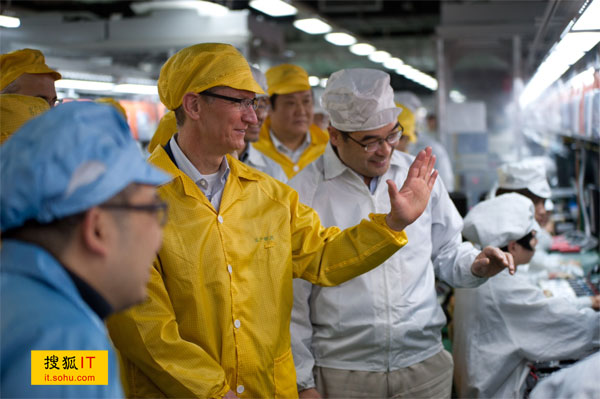 |
| On Mar 29th, 2012, Apple CEO Tim Cook visited Foxconn’s Zhengzhou factory. |
| Source: http://hrfoxconn.com/wordpress/?m=201203 |
In February, Foxconn announced that it would be raising basic wages by 16-25% to between 1800 RMB (US$290) and 2500 RMB (US$400), not including overtime at its Shenzhen factories. (In Shenzhen, the monthly minimum wage is 1500 RMB (US$240).) Under the agreement, FLA will make onsite verification visits to assure compliance along with inspections of other contractors such as Quanta Computer Inc., Pegatron Corp., Wintek Corp., and other companies that have been secretive about their operations.
|
|
|
Workers’ salary will be increased by16%~25% to CNY1,800~2,500/month but will Apple pay up? 2012-2-26 11:39:56 source: China Business |
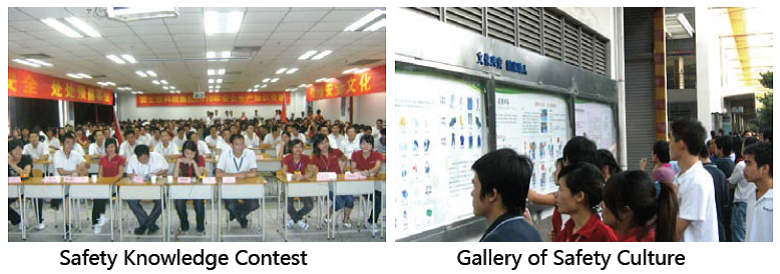
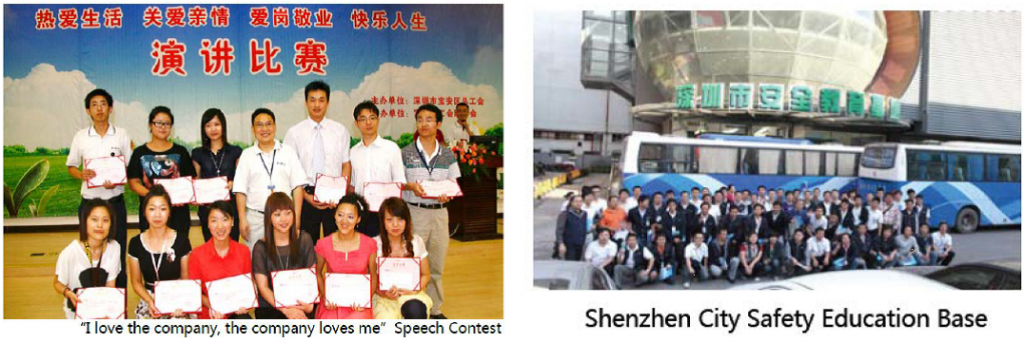
The impact of the deal will be far-reaching for China’s IT product assembly industry and for the welfare of young Chinese migrant workers. Interviewed by Reuters, FLA President Auret van Heerden said, “Apple and Foxconn are obviously the two biggest players in this sector. Since they are teaming up to drive this change, I really do think they set the bar for the rest of the sector.”
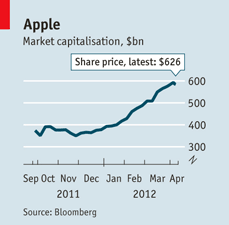
» Apple’s market capitalization rose (briefly) above $600 billion on April 10th, just 28 trading days after it reached $500 billion.
The Economist