
The Debate Over Northern Gateway
A tongue-in-cheek piece in the Globe and Mail this weekend may prove prescient on the on-going boisterous debate over the proposed Northern Gateway pipeline. The fiction describes a post 2015 Canada following yet another election victory by Stephen Harper that is facing difficult times. Though approved, the pipeline was given a negative environmental assessment and faces innumerable construction delays due to continued protests. Not surprisingly, Chinese enterprises, major stakeholders in the project, are not amused.
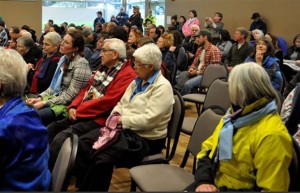
Public hearings on the pipeline began last January before the National Energy Board’s Joint Review Panel with the Canadian Environmental Assessment Agency. Crisscrossing 22 Alberta and BC communities, the panel COULD issue its final go-ahead by the end of 2013! Apparently, the schedule was extended by a whole year because more than 4,000 people had registered to make their views heard. A Vancouver Sun reporter opined that BC was not afraid of megaproject controversy for “the bigger the project, the larger and more long term the potential consequences, the more scrutiny any proposal deserves…”.
The environmental lobby claims the pipeline is too dangerous, crossing three fault lines and vulnerable to frequent landslides and other natural disasters. In addition, they claim the diluted bitumen is more corrosive than conventional oil and marked increases in tanker traffic in the Douglas Channel could lead to catastrophe oil spills. Meanwhile, an alliance of BC First Nations groups left on a cross-Canada tour this month, on board a VIA Rail ‘Freedom Train’, to protest Enbridge’s plans. A recent poll indicates that BC opposition to the project has steadily grown over the past few months since the start of the proceedings.
Interviewed by the Financial Post, CIBC Vice-Chairman Jim Prentice suggests that Canada may be talking itself out of multi-billion dollar foreign investments if the debate over energy infrastructure projects such as Northern Gateway drags out too long. “The international investment community [is] not interested in the debate. What they are interested in is investment certainty. And if you cannot provide them with the required certainty on issues [such as regulations and dealing with First Nations] it’s just as easy to build [elsewhere]”, he warned.
Inordinate attention may or may not be a bad thing, but what is certainly disturbing is the amount of ideological abuse being directed at Chinese investment in Canada. Elizabeth May, leader of the Green Party, heaved vitriol at Chinese state corporations, insinuating that the Chinese Communist Party, through its corporate arms, could dictate terms against Canada’s national Interests. Cited in the Financial Post, Ms May ranted: “What would happen if Syncrude were to decide they would do better putting a refinery here and selling their crude as a finished product? China [Sinopec] could say, ‘No, we veto that, we want it in China’”.
Don’t know if Ms May is aware that Sinopec owns a mere 9% stake in Syncrude, hardly enough to ‘veto’ any major investment decisions of an independent Canadian company. More important, she should remember that all foreign companies operating in Canada, including Chinese, whether state-owned or private, must abide by Canadian laws relating to corporate, environmental, and labour issues.
Chinese companies have sunk billions of dollars in Alberta’s oil sands and understandably they want something to accrue from that like making a profit. At an energy conference held in Calgary last week, Junsai Zhang, China’s ambassador to Canada, questioned singling out China as the bad guy: “[Your] government said that you want to diversity your [markets] and said it welcomes exports to China…I don’t know why [some Canadians] say they don’t want to export to China. I don’t know what is the basis for this.”
He reminded reporters that Canadian energy is NOT indispensible to China, as many Canadians assume, noting that China only imports a miniscule amount of spot oil from Canada. “It’s too early to say China imports your oil and gas. We are in a very good collaboration with Australia, with other Western countries. No problems. If we don’t import from here, we import from other countries. It’s OK”, he said.
In the same breath, he emphasized that Chinese companies are in Canada to do business, regardless of whether oil gets shipped back to China. “[Chinese companies] come here to participate…If there’s opportunity, [they] will take some shares [and] learn…the management practices and the way to manage regulations…they want to prove that they are the guys who abide by the regulations, by the local laws, and by the practices that already exist. They try to be part of the citizenship, a part of the community, and so far so good.”, he said.
As the Chinese ambassador’s remarks were still reverberating in Canadian ears, the President of Columbia Juan Manuel Santos landed in Beijing this week to pitch a pipeline that would run from Venezuela’s oilfields to Columbia’s Pacific coast, facilitating quicker shipments to China. Mr Santos further disclosed that there is considerable Chinese interest in building a railway linking the rich Llanos Orientales oilfields in eastern Columbia (along with Venezuelan) to the Pacific.
Enough said about the debate. In my next post, I will focus on the significance of Northern Gateway for both Canada and China.