
Shanghai Disneyland Opens in 2015
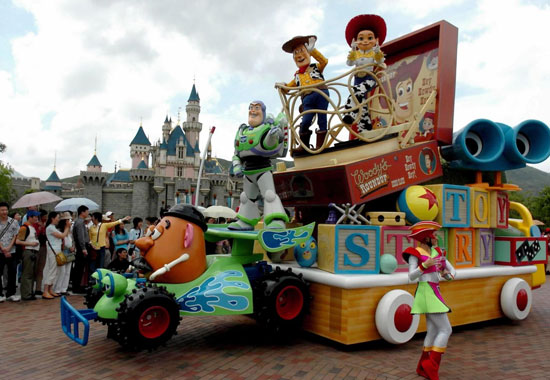
More than 500 designers, or what Disney calls “imagineers”, have worked for years to create the design concept for the first Disney resort on the Chinese mainland, in the hope of making the 3.9-square-kilometer resort 100 percent Disney, but with distinctive Chinese flavors.
For these Disney imagineers, who have already designed five Disney resorts, ensuring their designs are genuinely Disney is not as much of a challenge as ensuring Chinese elements and consumer tastes are appropriately considered and incorporated.
To achieve that goal, the designers launched numerous focus groups and undertook countless field research trips to hear from audiences, and witness and experience Chinese culture firsthand. They also welcomed into their design group top Chinese creative talent to ensure Chinese participation in the project from the very beginning.
One of the most debated designs has been of the main castle, the centerpiece of every Disney resort. To ensure a perfect castle for the Shanghai theme park, the team pinned many drafts on a giant wall to solicit opinions from visitors and partners.
Lead castle designer Doris Woodward, a senior director and producer who traces her family background to Shanghai, said Shanghai’s castle will be the biggest among Disney’s castles worldwide.
Instead of being home to any single princess, the castle in Shanghai will be home to all of Disney’s princesses, including Snow White and Pocahontas.
Tom Staggs, chairman of Walt Disney Parks and Resorts, said some of the designs in the Shanghai park have been pinned down but some are still up for modification. Designs will be constantly improved and refined during the development phase and visitors will be “surprised” when they enter the park at the end of 2015, he said.
He added that the Shanghai park will also feature plenty of rides and attractions, many of which are newly designed and cannot be found at other Disney theme parks.
When it opens in 2015, the Shanghai resort will have a theme park, two theme hotels, various dining and entertainment venues, recreational facilities, a lake and transportation hubs.
Total investment is expected to reach 24.5 billion yuan ($3.84 billion) for the theme park and 4.5 billion yuan for the hotels and the retail, dining and entertainment facilities.
– China Daily
Surrey’s Russell Craft Beer to China
Looking forward to tasting their brews and chowing down at their restaurant soon, if they locate in Beijing. With exceptions, Chinese industrial beer is tasteless. A number of craft micro-breweries cropping up in the Chinese capital such as Slow Boat Brewery that has a US Pacific Northwest taste and Great Leap Brewing located in a hutong (traditional alleyway) in Beijing’s trendy Gulou restaurant and bar district.
China to Renovate 4 million Rural Homes
If the policy works to prod farmers to renovate their old and dilapidated houses, it will be prolonged and spread across China. It will exert a double-whammy effect: rural poverty alleviation where it is most needed plus helping to jump-start consumption in the countryside that is critical for tranforming China’s development model in the coming decades.
The Chinese government said on Saturday it will subsidize 4 million poor rural households through a pilot scheme to renovate their dilapidated houses in rural areas this year.
CIDA Must Change
With major successes in poverty alleviation such as China’s that has lifted some 500 million Chinese into stable private sector employment without the help of NGOs and foreign government aid agencies, CIDA thinking about its role and model must change, says Brian Lee Crowley, Managing Director of Ottawa’s Macdonald-Laurier Institute.
http://www.ottawacitizen.com/business/CIDA+needs+catch+thinking/6931217/story.html#ixzz20Yq19CfD
Norman Bethune: Symbol for a New Canada-China Relationship Under Harper
Interesting piece on the Chinese icon and Harper government’s newly acquired reverence for him. Kind of ironic. http://www.theglobeandmail.com/news/politics/how-china-led-canada-to-norman-bethunes-shrine/article4409633/
Canada-China Trade
What does Canada trade with China?
Foreign Affairs Minister John Baird is currently on a tour of Asian countries, in which he is expected to deepen Canada’s business relationship with China, our second-biggest trading partner.
The Canadian government has been open about wanting to increase trade with China. In February, Prime Minister Stephen Harper made a much-publicized visit to the populous Asian nation, the main focus of which was economic deal-making.
In 1997, China was Canada’s fourth-largest trading partner, with total annual merchandise trade of $8.7 billion. Now, it’s our second biggest trading partner (behind the U.S.).
According to Statistics Canada, Canada exported $16.3 billion worth of merchandise to China in 2011, and imported more than $48 billion.
Here’s a look at what is being traded.
Manufactured goods make up the bulk of what we import. The single biggest category is mechanical appliances and electrical equipment — in April alone, we imported $1.7 billion worth of consumer items like washer/dryers and DVD players from China.
In that same month, we also imported over $440 million worth of other consumer goods, including toys and clothing.
Other major imports include plastics and rubber, as well as rare earth metals (like yttrium and cerium), which are used in the manufacture of hybrid cars, plasma screens and portable computers.
In a nutshell, commodities and natural resources.
“Mineral products” made up $4 billion — or 25 per cent — of Canadian exports to China in 2011. The major items include nickel, copper and in recent years potash, which is used in the manufacture of fertilizer.
China is also a major buyer of our wood and paper products, which accounted for $1.4 billion in 2011, as well as fish products and oilseeds like canola.
Simply put, oil. We currently export 99 per cent of our energy products to our southern neighbour. But Washington’s indecision on the Keystone XL pipeline — which would take crude from the Alberta oil sands down through Nebraska to Texas – has led Harper to talk openly about diverting oil to Asia.
China’s interest in Canadian crude is well established, given that the Asian giant has made multi-billion-dollar investments in Canadian oil companies like Syncrude, Athabasca Oil Sands and Penn West Energy.
China’s state-owned company Sinopec is a financial backer of Enbridge’s proposed Northern Gateway pipeline, which would funnel oil from Alberta to the B.C. port city of Kitimat, where it could then be shipped to China.
Canada mainly exports natural resources to China, and largely imports manufactured goods. This makes the relationship somewhat unusual, says one expert.
“It’s a weird trade pattern,” says Gordon Betcherman, a professor at the School of International Development and Global Studies at the University of Ottawa.
“It’s exactly the pattern you would expect to see between a rich, developed country and a much poorer developing country – except it’s exactly flipped.”
– excerpted from a CBC report
ACEEE: China More Energy Efficient Than Canada and US
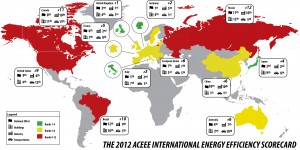
This ranking runs counter to Northern American perceptions of energy efficiency around the globe. In its first International Energy-Efficiency Scoreboard ranking of 12 major powers, the American Council for an Energy-Efficient Economy (ACEEE)scored Canada and the US lower than the several European countries, Japan, EU, China, and Australia. China tied for 6th and Canada was second last (ahead of Russia).
Here are excerpts from the ACEEE’s press release about the report:
ACEEE: United Kingdom Tops in Energy Efficiency, U.S. Lags in 9th Place
July 11, 2012
First International Energy Efficiency Scorecard of 12 Major Economies Also Finds Germany, Italy, and Japan Ranking Highly; U.S. Behind Most Countries, Including China, France, and Australia.
WASHINGTON, D.C. – The United Kingdom comes in first in a new energy efficiency ranking of the world’s major economies, followed closely by Germany, Italy, and Japan, according to the first-ever International Energy Efficiency Scorecard published today by the nonprofit American Council for an Energy-Efficient Economy (ACEEE). The report finds that in the last decade the U.S. has made “limited or little progress toward greater efficiency at the national level,” putting it in 9th place out of 12 economies around the globe.
The rankings are modeled on ACEEE’s time-tested approach to energy efficiency ranking of U.S. states, and include 12 of the world’s largest economies: Australia, Brazil, Canada, China, France, Germany, Italy, Japan, Russia, the United Kingdom, the United States, and the European Union. These 12 economies represent over 78 percent of global gross domestic product; 63 percent of global energy consumption; and 62 percent of the global carbon-dioxide equivalent emissions.
On a scale of 100 possible points in 27 categories, the nations were ranked by ACEEE as follows: (1) the United Kingdom; (2) Germany; (3) Italy; (4) Japan; (5) France; (6) the European Union, Australia, and China (3-way tie); (9) the U.S.; (10) Brazil; (11) Canada; and (12) Russia.
ACEEE divided the 27 metrics across four groupings: those that track cross-cutting aspects of energy use at the national level, as well as the three sectors primarily responsible for energy consumption in an economically developed country—buildings, industry, and transportation. The top-scoring countries in each grouping are: Germany (national efforts); China (buildings); the United Kingdom (industry); and a tie among Italy, China, Germany, and the United Kingdom (transportation).
The full report can be downloaded from: http://www.aceee.org/press/2012/07/aceee-united-kingdom-tops-energy-eff
The Little Private Airline that Could
Little known Spring Airlines, China’s sole privately-owned low-cost carrier (LCC) based in Shanghai, has thrived despite the odds as it exploits niches in a hyper-competitive market dominated by state giants. With 60 domestic routes, 7 overseas and counting, the no-frills carrier netted profit of 470 million RMB (US$71.2 million) in 2010, a year-on-year spike of 240%, and is expected to top 500 million RMB (US$78.7 million) last year. (Spring has yet to announce specific results due to its IPO application.)
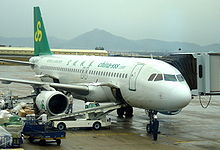
 Rising out of a virtual war zone piled with corpses of start-up private airlines, Spring has managed to survive in a regulatory environment that is heavily stacked in favour of the state behemoths. Wang Zhenghua, Spring’s CEO, told Reuters recently that the authorities are actually intimidated by the big airlines and have for years held up granting Spring access to new or prized routes such as to Taipei. Time slots are just as unfavourable forcing Spring to operate ‘red-eyes’ as a mainstay.
On its Shanghai-Beijing route, for example, flights arrive after midnight and depart before 7 AM. To appease the giants, the authorities have at times suggested Spring fly out of second and third-tier cities that are otherwise under-serviced but which adds to Spring’s costs. Headquartered at Shanghai’s domestic Hongqiao Airport, Spring also operates out of Shanghai Pudong as well as Shijiazhuang in north central China and Shenyang in the northeast.
To keep costs down, the basic service offers no complimentary water or meals but provides food and beverages for sale. Tickets are sold on its exclusive springairlines.com website along with a few designated ticket offices, serving to dramatically keep down marketing and management overhead. In operations, it maintains an average passenger load factor of 95% (well above industry norms) and uses planes longer. Spring offers single class seating across its fleet of 31 Airbus A320s that it leases or owns.
At the same time, Spring is at the forefront of LCC innovation. It has resisted introducing a ‘premium economy’ class or a bona-fide business class. Instead, in December 2011, it made the front row seats into a 3-3 configuration with extra leg room and marketed them as part of its ‘SpringPlus’ service that provides priority check-in and boarding, complimentary meals, and ticketing flexibility. Available on 13 routes, the new product is price competitive with first class and premium economy class services of the majors.
Earlier this year, Chinese media disclosed that the LCC is negotiating with non-airline Japanese interests to establish a Japanese subsidiary by next summer. Keen on making Japan’s under-served LCC market a pillar of its international operations, Spring believes it may garner more Chinese government approval for that market than for expansion on the domestic. In addition to Ibaraki Airport (80 km northeast of Tokyo), Takamatsu Airport, and Saga Airport in Fukuoka, Spring desires to land in Tokyo, Nagoya, and Osaka. Two-way traffic has recovered from the earthquake-tsunami-nuclear disaster of March 2011 and expected to exceed 2 million visitors within 2-3 years.
Riding on the back of high profits and projecting greater growth potential due to budget-conscious passengers now favouring the LCC option, Spring is a preparing to launch an IPO to significantly expand its fleet. Spring also wants to start its Shanghai-Bangkok run this year as part of its Southeast Asian offensive and is looking to fly to India, currently inadequately serviced by both Chinese and Indian carriers. This is part of Spring’s strategy of going where the state carriers are not.
The success of Spring underscores the immense challenges faced by private companies in China. In the transition to a domestic consumption-based economy, while the authorities covet a greater role for the private sector, big state companies enjoy the lion’s share of government attention and regulatory orientation.
According to the Civil Aviation Administration of China (CAAC) in FY2011, Chinese airlines carried 290 million passengers, up from 267 million, with profits surging to 45.6 billion (US$7.1 billion) from 35.1 billion RMB (US$5.32 billion) in spite of the global downturn. Industry wide, the passenger load factor (to November 2011) was 72.3%. For FY2012, the CAAC forecasts airline ridership to grow by 10% to 320 million passengers.
Australia Wants to Trade Directly With China Circumventing US Dollar
Further to an earlier post on the RMB’s internationalization, when this pans out, Australia will become the first Western country (after Japan) to trade with China using its currency and the RMB. Primary motivation – big cost savings. Expect other Western and developing countries to follow suit. Wake up call for Canada?
OECD: Largest Pool of Graduates From China by 2020
This projection by the OECD basically dovetails with the forecast of the McKinsey Global Institute (see June 21 post):
By the end of this decade, four out of every 10 of the world’s young graduates are going to come from just two countries – China and India.
The projection from the Organisation for Economic Co-operation and Development (OECD) shows a far-reaching shift in the balance of graduate numbers, with the rising Asian economies accelerating ahead of the United States and western Europe.
The forecasts for the shape of the “global talent pool” in 2020 show China as rapidly expanding its graduate numbers – set to account for 29% of the world’s graduates aged between 25 and 34.
The biggest faller is going to be the United States – down to 11% – and for the first time pushed into third place, behind India.
The US and the countries of the European Union combined are expected to account for little more than a quarter of young graduates.
-BBC