
The Little Private Airline that Could
Little known Spring Airlines, China’s sole privately-owned low-cost carrier (LCC) based in Shanghai, has thrived despite the odds as it exploits niches in a hyper-competitive market dominated by state giants. With 60 domestic routes, 7 overseas and counting, the no-frills carrier netted profit of 470 million RMB (US$71.2 million) in 2010, a year-on-year spike of 240%, and is expected to top 500 million RMB (US$78.7 million) last year. (Spring has yet to announce specific results due to its IPO application.)
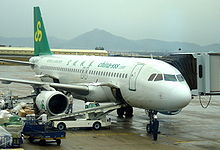
 Rising out of a virtual war zone piled with corpses of start-up private airlines, Spring has managed to survive in a regulatory environment that is heavily stacked in favour of the state behemoths. Wang Zhenghua, Spring’s CEO, told Reuters recently that the authorities are actually intimidated by the big airlines and have for years held up granting Spring access to new or prized routes such as to Taipei. Time slots are just as unfavourable forcing Spring to operate ‘red-eyes’ as a mainstay.
On its Shanghai-Beijing route, for example, flights arrive after midnight and depart before 7 AM. To appease the giants, the authorities have at times suggested Spring fly out of second and third-tier cities that are otherwise under-serviced but which adds to Spring’s costs. Headquartered at Shanghai’s domestic Hongqiao Airport, Spring also operates out of Shanghai Pudong as well as Shijiazhuang in north central China and Shenyang in the northeast.
To keep costs down, the basic service offers no complimentary water or meals but provides food and beverages for sale. Tickets are sold on its exclusive springairlines.com website along with a few designated ticket offices, serving to dramatically keep down marketing and management overhead. In operations, it maintains an average passenger load factor of 95% (well above industry norms) and uses planes longer. Spring offers single class seating across its fleet of 31 Airbus A320s that it leases or owns.
At the same time, Spring is at the forefront of LCC innovation. It has resisted introducing a ‘premium economy’ class or a bona-fide business class. Instead, in December 2011, it made the front row seats into a 3-3 configuration with extra leg room and marketed them as part of its ‘SpringPlus’ service that provides priority check-in and boarding, complimentary meals, and ticketing flexibility. Available on 13 routes, the new product is price competitive with first class and premium economy class services of the majors.
Earlier this year, Chinese media disclosed that the LCC is negotiating with non-airline Japanese interests to establish a Japanese subsidiary by next summer. Keen on making Japan’s under-served LCC market a pillar of its international operations, Spring believes it may garner more Chinese government approval for that market than for expansion on the domestic. In addition to Ibaraki Airport (80 km northeast of Tokyo), Takamatsu Airport, and Saga Airport in Fukuoka, Spring desires to land in Tokyo, Nagoya, and Osaka. Two-way traffic has recovered from the earthquake-tsunami-nuclear disaster of March 2011 and expected to exceed 2 million visitors within 2-3 years.
Riding on the back of high profits and projecting greater growth potential due to budget-conscious passengers now favouring the LCC option, Spring is a preparing to launch an IPO to significantly expand its fleet. Spring also wants to start its Shanghai-Bangkok run this year as part of its Southeast Asian offensive and is looking to fly to India, currently inadequately serviced by both Chinese and Indian carriers. This is part of Spring’s strategy of going where the state carriers are not.
The success of Spring underscores the immense challenges faced by private companies in China. In the transition to a domestic consumption-based economy, while the authorities covet a greater role for the private sector, big state companies enjoy the lion’s share of government attention and regulatory orientation.
According to the Civil Aviation Administration of China (CAAC) in FY2011, Chinese airlines carried 290 million passengers, up from 267 million, with profits surging to 45.6 billion (US$7.1 billion) from 35.1 billion RMB (US$5.32 billion) in spite of the global downturn. Industry wide, the passenger load factor (to November 2011) was 72.3%. For FY2012, the CAAC forecasts airline ridership to grow by 10% to 320 million passengers.
Very interesting, thank you! I’ll look at Spring’s web site. It provides an option.
Could you let me know how to place a picture on the web?