
Mainland and Taiwan First Fibre Optic Link
The first data has been sent over cables linking China and Taiwan, in what seems to be another sign of improved ties between the two. The two fibre-optic cables connect the city of Xiamen in southern China and the Taiwanese-controlled Kinmen island group, located around 200km from the main island of Taiwan. The cables have been laid by Taiwan’s Chunghwa Telecom, China Telecom, China Unicom and China Mobile and cost a total of 200m Taiwanese dollars (US$6.7m).
Relations between China and Taiwan have been improving since President Ma Ying-jeou took office in Taiwan in May 2008. His policy has been to sign more economic commercial agreements with the People’s Republic – such as this one.
“This is part of a crescendo of increasing economic, logistic and person-to-person links across the Straits – we’ve seen direct flights increasingly replacing the flights via Hong Kong or Macau and a growing number of tourists from the mainland visiting Taiwan,” Duncan Clark, an analyst from BDA China, told the BBC.
“Beijing thinks that in the end this kind of co-operation will lead to Taiwan becoming politically closer to mainland China”, commented Jonathan Fenby, a China director of the research service Trusted Sources.
– BBC
On the Canada-China Economic Complimentarities Study Part II
In this post, the focus is on three sectors that exhibit among the biggest opportunities for Canadian companies in China.
Aerospace and Transport Infrastructure
Aerospace is a sector at which Canada excels, especially in regional and business aircraft, helicopters, engine parts, landing gear, structural assemblies and avionics, not to mention services, training, and maintenance, repair, and overhaul (MRO)). On the other hand, the Chinese travel market is experiencing brisk growth that is expected to continue for years if not decades to come.
Geneva-based Digital Luxury Group estimates that China’s travel market already hovers around US$232 billion. China’s international travelers made over 80 million trips (including to Hong Kong and Macau) last year, a bump of 22% over 2010, according to the Annual Report of China Outbound Tourism. Despite the economic slowdown, mainlanders still made nearly 39 million trips during the first half of this year.
By 2020, that volume is expected to top 100 million, pushing China past Germany and the US to become the largest outbound tourism market. Other studies forecast Chinese air travel to grow by 8% per year through 2028, necessitating purchases of some 3800 aircraft and 3000 civilian helicopters. The Commercial Aircraft Corporation of China (COMAC) aspires to become a high-end industry leader by 2020 with its C919 mid-sized airliner and other jets and turboprops. COMAC is extensively partnered with Bombardier to achieve that end. With Chinese airlines overhauling their fleets, moreover, the demand for MRO will only soar along with demand for new pilots, some 2500 a year to the end of the decade.
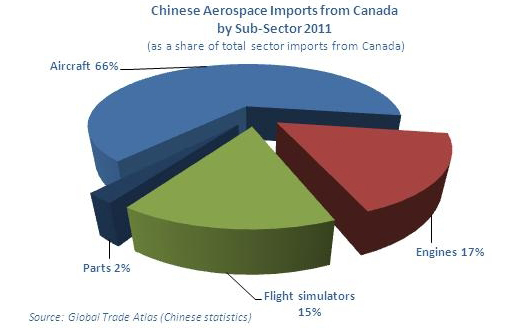
Another indication of China’s burgeoning needs is a State Council plan, announced in July, to add 70 smaller airports by 2015, mainly in under-serviced central and western parts of the country. Thus far, 11 projects have been approved with another 101 existing airports slated for renovation or expansion.
Mr Li Jiaxiang, Director of the Civil Aviation Authority, told the press recently that China has plenty more room for new facilities as there are only about 300 airports currently in operation. China’s aviation infrastructure isn’t even up to par with those of other BRIC countries, let alone the US, home to some 19,000 airports of all sizes, he said.
Clean Technology and Services
Opportunities abound for Canadian clean-tech companies in a number of areas: municipal and industrial wastewater treatment, solid waste treatment, air and water monitoring equipment, and bio-energy, renewable energy, and energy efficiency, including green buildings. Canada has also made considerable investments in carbon capture and storage and marine energy projects to demonstrate commercial viability.
The Chinese government has mandated that carbon dioxide emissions per unit of GDP be reduced by 40-45% compared to 2005 levels by 2020. During the 12th Five-Year Plan period (2011-2015), strong emphasis is put on clean energy, notably renewables, energy conservation, and clean vehicles with the central government committing 3.4 trillion RMB ($536 billion) for environmental clean-up and protection.
Plans are being drawn up to build 100 clean energy cities like Tianjin Eco-City, 200 clean energy counties, and 11,000 clean energy and solar energy zones and towns. In these areas, in addition to sales and service, Canadian clean-tech SMEs can play a special role in building technology incubators and engaging in venture capital exchanges.
Machinery and Equipment
Among the seven strategic industries afforded special focus under the 12th Five-Year Plan, high-end equipment manufacturing and new energy vehicles stand out. China’s machinery and equipment sector is expected to growth by 12% a year through 2015 with high-end equipment manufacture doubling that rate.
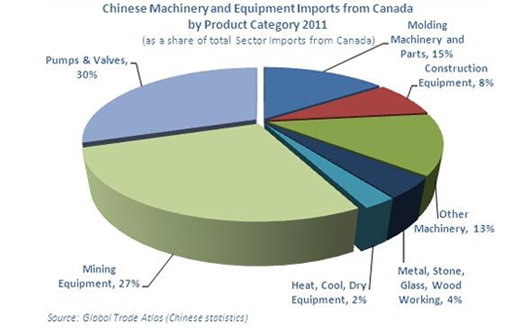
Given China’s increasing mechanization of agriculture and renewed emphasis on mining safety and environmental remediation, Canadian manufacturers are able to pursue unique opportunities with their cutting-edge technology and high safety standards. In addition, services tied to the machinery sector generate high profits and Canadian companies are eager to expand into a market that possesses the highest growth potential in the entire Asia-Pacific region.
Reuters: Bogu Kailai Get Suspended Death Sentence
http://www.reuters.com/article/2012/08/20/us-china-trial-idUSBRE87J01W20120820
A Chinese Farm House for All Seasons
See the article and photo gallery of the fascinating design for an all-season farm house in rural Shaanxi.

China has set itself the goal of transforming half of its rural population of 700 million people into productive, comfortable members of urban conglomerations in the next three decades. Thus far, the process has moved along with a great deal of work for civil and mechanical engineers and the construction industry, but very little role for architects in the generically styled concrete and brick urban buildings. Award-winning architect at the University of Hong Kong John Lin and his associates believe that this process of urbanization also calls for a flexible approach to house design in rural areas. The result is a project that looks at the role of the stereotypic village house and attempts to propose a prototype which reaches toward contemporary living styles while respecting the functionality and traditions of the past.
http://www.gizmag.com/chinese-rural-architecture-john-lin/23230/pictures
Don’t Know What All the Fuss is About?
She looks caucasian to me. And even if she were intended to be an Asian, what difference does it make?

Bank of Canada bans image of Asian-looking woman from new $100 banknotes
The original image intended for the reverse of the plastic polymer banknotes, which began circulating last November, showed an Asian-looking woman scientist peering into a microscope.
See Canadian Press report about the controversy:
http://ca.finance.yahoo.com/news/bank-canada-bans-image-asian-083008805.html

On the Canada-China Economic Complimentarities Study Part I
In the wake of the announcement of Canada’s participation in the Trans-Pacific Partnership talks spearheaded by the Americans, media focus has been on Canada’s role in what many feel will be a lumbering process. Then, a couple days ago, Canadian Trade Minister Ed Fast released the landmark “Canada-China Economic complementarities Study” jointly with Chinese Commerce Minister Chen Deming.
Begun last year at the behest of Prime Minister Harper and Chinese President Hu Jintao, the study covers seven key sectors with strong complementarities but also distinct challenges. Because it is a ground-breaking document that could pave the way for substantive negotiations toward a free trade agreement (FTA) (see August 15 post on APF’s survey of business attitudes to FTA negotiations), the study is worth closer examination.
The seven sectors include: natural resources – energy, forest products and mining – that together constitute over 1/3 of Canada’s total trade and 11.6% of GDP in 2011; agriculture and agri-foods; increasingly important clean energy and green technology; transportation infrastructure and aerospace; along with machinery and equipment R & D and manufacture, financial, engineering and other services, and textiles and apparel. I will focus on resources and agriculture in this post, other sectors in a second, and a summation of Canada-China trade in a third.
Natural Resources:
Now the world’s second-largest importer of natural resources and the largest energy consumer requiring oil and gas imports to meet over 50% of its needs, China is increasingly looking to Canada both as a source for imports and an investment destination. However, Canadian oil exports are severely restricted by the lack of pipeline infrastructure that has put the Northern Gateway project into the public spotlight.
Similarly, the bid for Calgary-based Nexen Inc. by state-owned China National Offshore Oil Corporation (CNOOC) puts the Harper government’s embrace of foreign investment, particularly Chinese, in the face of negative public opinion, to the test. The study highlighted “the need for increased regulatory clarity, efficiency, and predictability in the context of direct investments in each other’s countries”.
Forest products, mainly lumber and wood pulp, have become Canada’s number one export to China, having expanded 45 fold within a decade to top $4 billion last year. In addition, Canadian companies are looking to higher value-added exports to satisfy China’s rising demand for products with low carbon footprints and using energy efficient materials. There is also upward demand for non-traditional products and by-products such as dissolving pulp, an affordable alternative to cotton. Going the other way, China is a major supplier of bamboo and rattan and certain forest products to Canada.
In mining, China’s massive manufacturing needs and rapidly improving middle-class living standards are fueling consumption of Canadian diamonds, gold, aluminum, iron ore, coal, nickel, potash, and other minerals along with Chinese outbound investment. Chinese investment in Canadian minerals has grown dramatically over recent years yet they amounted to only 1.8% of total FDI in Canada last year. For its part, Canada is interested in introducing Canadian junior mining exploration companies to China where no such industry exists.
Canadian natural resources related expertise and technology is coveted in China for aiding the sustainable development of natural resources. In energy, Canadian capabilities in long distance pipeline building would be a boon to China’s oil and gas infrastructure expansion. Canada’s green mining and deep exploration know-how and state-of-the-art mining technologies not only augment extraction rates and recovery ratios but also enhance land restoration and reclamation. There is plenty of space for cooperation in forest product technologies and forest management and protection practices as well.
Agriculture and Agri-foods
Barriers on both sides inhibit trade in this sector. Although China’s agricultural tariffs have been lowered since its 2001 WTO accession, they are still quite high at 15.6%. At the same time, Canada maintains average tariffs of 11.3% not to mention supply management in some industries. Moreover, different sanitary and phytosanitary measures, technical regulations and standards, and administrative capacity constraints often serve to delay, disrupt, or otherwise complicate trade between the two countries.
Despite these obstacles, China’s rapid urbanization and changing consumption patterns; its diversification of stable import sources to supplement domestic production; and consumer yearning for healthy and safe food products, particularly following the rash of food safety scandals, provide ample opportunities for Canadian agricultural producers and processors. Canada is the world’s leading producer of canola products and a major supplier of quality beef, pork, and fish and seafood while China is major supplier of prepared vegetables and fresh temperate-climate fruits to Canada.
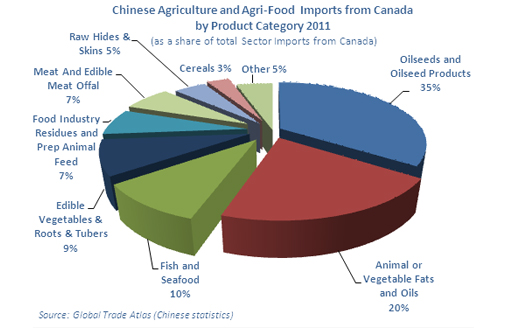
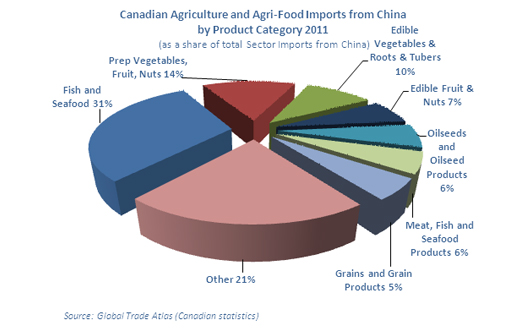
On top of trade, Canada possesses considerable knowledge in agricultural water management, especially irrigation and drainage management and technology and low-till or no-till agronomic practices that can help China address soil deterioration and arable land loss. Canada is also a leader in animal husbandry, plant breeding, and plant and animal disease control that could lead to partnerships and investments in both countries.
ADB: Green Tax for China
This is definitely a good idea but difficult to introduce given powerful regional and industrial interests, let alone overlapping taxation issues.
The report acknowledges that China, the world’s largest emitter of carbon dioxide, has attained a number of notable environmental achievements particularly during the last five years, including more investment in environmental infrastructure and stronger accountability and enforcement. These measures have helped the world’s second-largest economy to reduce chemical oxygen demand and sulfur dioxide emissions 10 percent and cut energy consumption per unit of gross domestic product by almost 20 percent, the ADB says.
While China’s environment has improved in many respects, “the overall situation continues to deteriorate as environmental pressures increase,” Robert Wihtol, director general of ADB’s East Asia Department said in a statement, adding that China’s environmental challenge, “is arguably the most complex that any country has confronted.”
Although China over the last few years has hinted at introducing a comprehensive environmental tax policy, no such policy has been introduced by the government. China’s State Council last October said it would “conduct research regarding the collection of an environmental tax.” But Zhang Peisen, a researcher with the State Administration of Taxation, told state-run news agency Xinhua that a new environmental tax would be complicated for China, as it would have to take into consideration the relationships that already exist between the country’s existing taxes.
The ADB report also points to potential crises in water pollution, water scarcity and solid waste. While the Chinese government has achieved major advances in controlling industrial and domestic sources of water pollution, it says, water pollution remains a problem, with urban and industrial wastewater treatment and solid waste management posing major challenges. Addressing these issues, ADB says, “will require innovative strategies, regulations, and economic incentives.”
The ADB report also urges a national regulatory framework of “eco-compensation” whereby the government or private sector would pay for ecological services protection by households, communities or local governments.
– UPI
In Kenya Yao Ming Calls on Chinese to Stop Buying Ivory
Yao Ming, diving queen Guo Jingjing, along with other sports personalities and entertainment celebrities are increasingly appearing on Chinese TV and other media to educate Chinese on their consumption of shark’s fin, bird’s nest, and now ivory. This is a laudable trend and I would add encouraging the nouveau riche to refrain from eating wild animals (sometimes endangered species such as giant salamanders ) if only for their health since those critters carry various viruses and diseases. 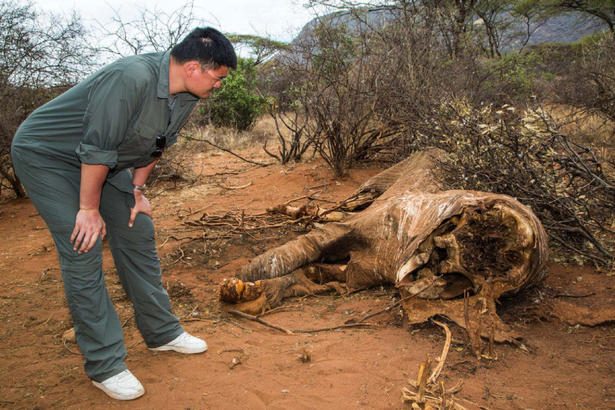 Handout/AFP/Getty Images
Forest Products Association of Canada Endorses Canada-China Study
Following my August 15 post on the Asia Pacific Foundation’s survey of Canadian business attitudes on negotiations toward a Canada-China free trade pact, I’ll have a post on the much anticipated Canada-China Econmic Complimentaries Study released Wednesday but here is an immediate endorsement from the Forest Products Association of Canada.
| Canada’s Forest Products Industry Looks to Strengthening Trade Ties with China
Aug. 16, 2012 (Press Release) – The Forest Products Association of Canada (FPAC) is urging the government to follow through on the conclusion of the Canada-China Economic Complementarities Study which states that Canada and China should continue to strengthen their bilateral trade and investment ties. Canadian forest companies are already working hard to deepen relations with the lucrative consumer market in China. Increased exports are also essential for the forest products industry to reach its Vision2020 goal of generating an additional $20 billion in economic activity from new innovations and growing markets “Growing our exports to overseas markets, especially China, is vital to our Vision and the future prospects of Canada’s forest products sector,” says Catherine Cobden, the President and CEO of FPAC. “We agree with this study which highlights the benefit of deeper Canada-China trade and investment ties.” Forest products are already Canada’s number one export sector to China. Since the year 2001 the industry has increased its wood exports to China by 45 times. Total Canadian forest products exports to China exceeded $4 Billion in 2011. “We truly appreciate the important role the federal government has already played in supporting the sector’s market diversification efforts overseas especially in China,” says Cobden “Record-high sales of Canadian forest products to China are creating jobs and economic opportunities for Canadians especially in rural communities that rely on the health of the forest sector.” FPAC provides a voice for Canada’s wood, pulp, and paper producers nationally and internationally in government, trade, and environmental affairs. The $57-billion-a-year forest products industry represents 2% of Canada’s GDP and is one of Canada’s largest employers operating in hundreds of communities and providing 230,000 direct jobs across the country. SOURCE: Forest Products Association of Canada |