
毕节五童之死 Death of Five Runaways in a Dumpster
This is the first of periodic posts in Chinese on China’s social and cultural issues.
毕节五童之死
2012年11月16日晨,贵州省毕节市七星关区流仓桥办事处环东路一垃圾箱内,发现5名流浪儿死亡。经当地公安部门调查,五名男孩是因在垃圾箱内生火取暖导致一氧化碳中毒身亡。在他们生命的最后24小时里,曾有附近居民看到他们踢球热身取暖。被人发现时,五个孩子用纸壳当棉被,紧紧 地抱在一起。 (图为事发垃圾箱。
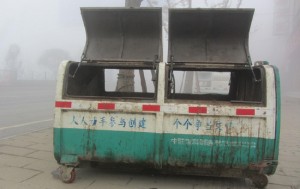
来源:http://www.yangtse.com/system/2012/11/20/015272887.shtml)

(图为11月16日“闷死”的5名少年于2012年1月在贵州毕节七星关区民政局安置点与另一名流浪儿的合影。来源:http://news.china.com/zh_cn/hd/11127798/20121121/17540627.html)
当晚事件在网络上被披露后,引起了巨大反响。童话大王郑渊洁评论说:“虽然你们在垃圾箱里离开世界,但你们不是垃圾,未能对你们尽到呵护责任的成年人是垃圾。冻死儿童就是冻结未来。请在天堂和卖火柴的小女孩团聚时宽恕我们。”博主“顽童有点儿老”写道:“当你在温暖的房间里,津津有味地吃哈根达斯的时候,有没想到我们的国家里还有很多这样的孩子,他们需要你的帮助?”网友创作的一首名为《火柴天堂》的歌这样唱道:有谁理解他们孤单/有谁听过他们想家的呼唤/……妈妈牵着你的手回家/睡在温暖花开的天堂。
舆论的巨大压力下,毕节政府迅速出台了措施,五名儿童所在区镇负责人、所在小学校长、当地民政部门负责人被免职、停职。毕节市、县(区)财政每年将拿出约6000万元经费,设立留守儿童关爱基金,并启动了“流浪儿救助机制”。反应不可不谓迅速、果断。然而,无论措施多么“积极有效”,也无法唤醒五个年幼的生命。
11月22日是西方的感恩节,也是这五个孩子的头七祭日。新浪微博发起“流浪儿冬衣行动”,号召博友为街边的失助儿童捐助一床被子或是一件冬衣。三天来,转发量已超过5万。大家的热情给这个冬天稍稍增添了几分温暖。比起严寒,对生命的冷漠麻木更加致命。这五条无辜生命的逝去不是某个人、某个机构的责任,而与我们每个人有关。
– by Ava
Li Keqiang and China’s Much-Needed Reforms
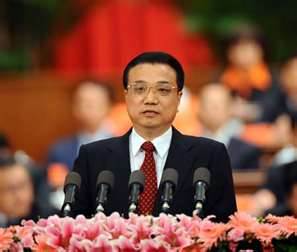
Predecessors Zhu Rongji and Wen Jiabao are hard acts to follow for Premier-in-waiting Li Keqiang. Mr Li will have to perform the double feat of taking on entrenched SOEs while maintaining high growth as China grapples with more sustainable development shifting from an export-led strategy to domestic consumption. Reforms to create a bigger middle class will be critical in avoiding the so-called ‘middle income trap’ that has thwarted the aspirations of many developing countries.
Mr Li’s background and training in law and economics, in contrast to the engineers before him, bode well for reform. Despite being immersed in the intellectual and political fervor that enveloped Peking University during the heady 1980s, as President of the Student Council, Mr Li shied away from student radicalization that eventually contributed to the tragedy on Tiananmen Square. Graduating with a law degree, Mr Li went straight to the Communist Youth League Central Committee where he came under the wing of Hu Jintao to eventually take over as Party Secretary. During that time, he also obtained a MA in law and studied part-time toward a doctorate in economics again at his alma mater.
In 1998, he was dispatched to Henan, then one of the poorest provinces in central China plagued by an outbreak of AIDS that had infected tens of thousands of peasants who contracted HIV through dirty syringes selling blood to underground blood-buying rings. Once the central government acknowledged the extent of the epidemic, Mr Li was instrumental in channeling government assistance to victims and publically urging compassion toward sufferers. Six years later, he was transferred to head up rust-belt Liaoning, serving as Party Secretary until 2007. Under his watch, the two provinces grew faster than 10% annually. So, it was not surprising that he was catapulted to the pinnacle of power, the Standing Committee of the Politburo, at the 17th Party Congress that year.
Since his appointment as First Vice-Premier, Mr Li has made modest inroads in his portfolios including public health, food safety, and housing which have been stricken by national scandals and volatile price rises. In past speeches, Mr Li has spoken extensively on unsustainable rates of government-led investment, the troubled export sector following the global financial and European debt crises, difficulties in stimulating domestic consumption, and an underdeveloped service sector, just to name the more important issues. Most recently, Mr Li’s remarks on SOE and tax reform were published on a government website: “At present, reform has encountered a ‘fortress area’ and a ‘deep water area’ (formidable obstacles). We must overcome difficulties and get rid of all institutional obstacles that hinder scientific development”.
Schooled in the rule of law and economic development, analysts believe Mr Li also has his eye on yawning income inequality, the wide gap between the cities and the countryside, and the numerous problems accompanying China’s rapid urbanization. The OECD projects that by 2030, as many as 300 million more farmers will have moved into cities to join the already nearly 700 million urbanites. Urbanization will continue to drive China’s high rates of investment but the key going forward is encouraging more private and foreign involvement.
A recent Moody’s report emphasized that China must accelerate reforms to sustain economic growth – heightened market competition, overhauling SOEs, and promoting more certainty and transparency in rules and regulations. Overcapacity exists in a number of industries that raise risks for China’s largest SOE banks. Moody’s judges Chinese bank asset quality as ‘negative’ over the next 12-18 months. Chinese total bank assets are now worth 240% of GDP, substantially higher than most major emerging markets.
Rebalancing China’s economy will require stiff face-offs with provincial governments and SOEs that have reaped windfalls from the existing system. While core state monopolies in the oil and gas sector and regional and national power grids will not be stormed any time soon, the central government recently announced measures to dent the power of SOEs in non-strategic sectors such as telecom and manufacturing. But, China will need an iron-fisted reformer of Mr Zhu Rongji’s stature and determination to deal powerful blows to deep-rooted interests.
Will Mr Li backed by Mr Xi be that man?
Debut Landings of the J-15 on the Liaoning
|
|
| This undated photo shows staff members checking a carrier-borne J-15 fighter jet on China’s first aircraft carrier, the Liaoning. China has successfully conducted flight landing on its first aircraft carrier, the Liaoning. After its delivery to the People’s Liberation Army (PLA) Navy on Sept. 25, the aircraft carrier has undergone a series of sailing and technological tests, including the flight of the carrier-borne J-15. Capabilities of the carrier platform and the J-15 have been tested, meeting all requirements and achieving good compatibility, the PLA Navy said. Designed by and made in China, the J-15 is able to carry multi-type anti-ship, air-to-air and air-to-ground missiles, as well as precision-guided bombs. The J-15 has comprehensive capabilities comparable to those of the Russian Su-33 jet and the U.S. F-18, military experts estimated. (Xinhua/Zha Chunming) |

LIAONING AIRCRAFT CARRIER, Nov. 25 (Xinhua) — China has successfully conducted flight landing on its first aircraft carrier, the Liaoning, naval sources said.
A new J-15 fighter jet was used as part of the landing exercise.
After its delivery to the People’s Liberation Army (PLA) Navy on Sept. 25, the aircraft carrier has undergone a series of sailing and technological tests, including the flight of the carrier-borne J-15.
Capabilities of the carrier platform and the J-15 have been tested, meeting all requirements and achieving good compatibility, the PLA Navy said.
Since the carrier entered service, the crew have completed more than 100 training and test programs.
The successful flight landing also marked the debut of the J-15 as China’s first generation multi-purpose carrier-borne fighter jet, the PLA Navy said.
Designed by and made in China, the J-15 is able to carry multi-type anti-ship, air-to-air and air-to-ground missiles, as well as precision-guided bombs.
The J-15 has comprehensive capabilities comparable to those of the Russian Su-33 jet and the U.S. F-18, military experts estimated.
CBoC Report: Canadian Exports to China to Surge to C$45 Billion by 2025
This week, the Conference Board of Canada (CBoC) came out with its latest study projecting Canadian exports through 2025. “What Might Canada’s Future Exports Look Like?” rests on a number of basic (and alternate) assumptions about GDP growth and exchange rate fluctuations of Canada’s key trading partners. In this post, I will take away the most relevant parts that deal with Canadian exports to China.
The CBoC sees China’s GDP growing at around 6.5% over the long term if China experiences a ‘soft landing’ but could tumble to 3-4% if it is hard one. This assumption is more conservative than the 7% to 7.5% growth forecast by many Chinese and foreign economists. A recent study by the Development Research Center under China’s State Council forecasts an average of 8.1% for the decade through 2020 and somewhat lower growth in the 2020s. Perhaps more important, the research argues it will take less time for China to stride the so-called ‘middle-income trap’ (5 years between 2021-25) than it took for Korea, Hong Kong, Singapore, and Japan to huddle it (7-12 years).
CBoC agrees that China is not about to experience a ‘hard landing’ triggered by a major housing market collapse for a number of reasons:
– 1/3 of Chinese homes are purchased with cash
– down payments average between 25% and 50%
– mortgage loans constitute only 15% of GDP as compared to 65% in the US
– only 6% of overall bank loans go to property developers
– the largest banks are state-owned (smaller banks are shareholding entities with government institutional participation)
– and bank credit as a share of GDP has remained the same since 2003
As for the Canadian Dollar versus the Chinese RMB, CBoC expects the Chinese currency to appreciate against the Loonie to stabilize around $1: 5 RMB by the late 2010s into the early 2020s. One reason is that the Chinese government will continue to be under heavy political pressure from the US, EU and other major trading partners to increasingly allow market mechanisms to determine the Yuan’s value. An appreciating RMB is a boon for Canadian exports as it spurs consumer spending, especially for imported goods and services. (In 2011, Industry Canada statistics show that raw materials – pulp, minerals, wood, mineral fuels, and oil seeds – made up Canada’s top five merchandize exports to China.)
Given these assumptions, CBoC expects Canadian exports to China hit C$45 billion by 2025 from $15 billion last year, representing nearly 8% year-on-year growth over 14 years. China’s share of Canadian merchandize exports would more than double from 3.3% in 2010 to 6.8% which would make China Canada’s second biggest export destination, trading places with the UK.
For Canadian merchandize exports, a 1% increase in China’s GDP translates into a 1% increase in demand for Canadian products. So, if the Chinese economy expands faster than the report’s assumptions which may well be the case, Canadian exports to China would surge, putting into jeopardy Canada’s ability to meet Chinese demand over the long term.
In addition, export of Canadian services to China increases substantially to over 3% of total exports during the forecast period, reflected in increasing numbers of Chinese tourists and students and with huge potential for certain parts of the financial sector.
Sarah Kutulakos, executive director of the Canada-China Council, cited recently in the Globe and Mail, urged Canadian companies to make more of an effort to break into carefully targeted Chinese markets with products and services that they excel at such as financial services and clean tech. “We need to position ourselves in the near-term to meet existing Chinese needs, such as insurance products and pension plans for an enhanced social safety net. Getting in on the ground floor of those reforms could be very lucrative”, she underscored.
It is also interesting to note that while Canadian merchandize exports to the US will continue to grow by nearly 2% annually over the forecast period, the share of exports to US will drop from 74.9% in 2010 to 68% by 2025.
Canada’s Top 10 Trading Partners in 2010
|
Country |
Total Exports (CAD) |
Total Imports (CAD) |
% Share of Total Exports |
% Share of Total Imports |
|
US |
299,075,013,698 |
203,388,584,488 |
74.90 |
50.37 |
|
13,232,265,799 |
44,522,918,962 |
3.31 |
11.03 |
|
|
5,008,226,868 |
22,110,444,350 |
1.25 |
5.58 |
|
|
UK |
16,367,388,056 |
10,712,732,911 |
4.10 |
2.65 |
|
9,195,225,455 |
13,446,993,809 |
2.30 |
3.33 |
|
|
3,936,632,869 |
11,286,501,895 |
0.99 |
2.80 |
|
|
3,709,313,608 |
6,147,148,797 |
0.93 |
1.52 |
|
|
2,349,275,091 |
5,433,698,289 |
0.59 |
1.35 |
|
|
1,916,122,642 |
4,662,174,865 |
0.48 |
1.15 |
|
|
2,562,749,138 |
3,292,351,908 |
0.64 |
0.82 |
Source: Wikipedia
Canadian exports are very sensitive to US GDP growth as a 1% drop in US real GDP results in roughly a 2% decline in growth of merchandize exports. So, if the US Congress fails to address the ‘fiscal cliff’, not to mention start to rein in its 100% of GDP national debt, GDP growth in the US could slump to well below the study’s assumption of long-term 2.5% growth. Needless to say, that would spell calamity for Canada goods south of the border.
Canadian Universities Among Best in International Science Programs for Asian Students
Surprisingly, a Asia-based news portal ranks York University and the University of Saskatchewan among those with the best programs for aspiring Asian science students.
http://asiancorrespondent.com/92434/the-best-international-science-programs-for-asian-students/
Academic: Benefits of CNOOC’s Nexen Bid Outweign Risks
Leonard Waverman, former Dean of University of Calgary’s Haskayne School of Business tabulates the net benefits of the Nexen deal which go way beyond economics.
Report: China to Have 3 Gigawatts of Solar Thermal Power By 2015
China will have 3,000 megawatts of solar thermal power installed capacity by 2015, with the total market value reaching 45 billion yuan (7.15 billion U.S. dollars), according to a report released on Wednesday.
Most parts of China are suitable for the development and use of solar energy, with 98 percent of the country’s territory recording an annual average of 1,000 kilowatt-hours or above generated from solar radiation per square meter, according to a green paper on climate change.
The paper, released by the Social Sciences Academic Press, put the country’s annual average of energy generated from solar radiation per square meter at 1,500 kilowatt-hours, an amount possibly equal to the amount of energy consumed by an average household in one year.
Western and hinterland regions have more abundant solar energy resources, as such areas generally feature terrains located at higher altitudes and less humid weather than eastern and coastal areas, it reads.
The most solar radiation energy is recorded in southern Tibet and the Golmud region in Qinghai, while the least is recorded in the southwestern municipality of Chongqing.
The green paper also forecast more extreme weather in China in the coming centuries. People and public facilities will be exposed to more risks brought about by such weather as a result of the emission of more greenhouse gases.
The report was released as nations are gearing up for a new round of climate change talks at the United Nations Climate Change Conference, which will be held from Nov. 26 to Dec. 7 in Doha, Qatar.
– Xinhua
Confidential Foreign Policy Draft Plan Says Canada Slow Off the Mark to Asia/China
A confidential government document obtained by CBC News warns the Harper government has been slow to open new markets in Asia, leaving Canada firmly tied to the troubled U.S. economy for a long time to come.
The document prepared by Foreign Affairs and dated Sept. 6 is a draft of a highly classified new “Canadian foreign policy plan” the Conservative government has been preparing for more than a year.
The draft briefing paper for the federal cabinet states: “We need to be frank with ourselves — our influence and credibility with some of these new and emerging powers is not as strong as it needs to be and could be.
“Canada’s record over past decades has been to arrive late in some key emerging markets. We cannot do so in the future.”
The Harper government itself took the slow road to China.
Prime Minister Stephen Harper didn’t visit Beijing for almost four years after first being elected in 2006.
Now the Harper government wants to focus Canada’s international efforts primarily on one goal: forging new trade deals and business opportunities in the rapidly expanding markets of Asia and South America.
The draft plan for a new foreign policy states: “The situation is stark: Canada’s trade and investment relations with new economies, leading with Asia, must deepen, and as a country we must become more relevant to our new partners.”
 Prime Minister Stephen Harper lauded stronger relations with China during a speech in Guangzhou during his visit to China in February. A confidential draft document makes deepening trade ties with Asia the main focus of Canada’s new foreign policy. (Kin Cheung/Associated Press)
It also drops any pretense of using trade deals to pressure countries such as China on human rights and other matters of democratic principle.
On the contrary: “To succeed we will need to pursue political relationships in tandem with economic interests even where political interests or values may not align.”
Instead, the draft doctrine is mainly about money, recasting Canada’s international role from aiding the world’s needy to reaping its riches.
That’s in stark contrast to Harper’s views of China when he first came to office.
“I think Canadians want us to promote our trade relations worldwide and we do that,” the prime minister said in November, 2006. “But I don’t think Canadians want us to sell out important Canadian values, our belief in democracy, freedom, human rights. They don’t want to sell that out to the almighty dollar.”
Six years later, almost every aspect of the Harper government’s international plan casts foreign policy as a tool to give Canada either direct economic benefit or access to China and other emerging markets.
– cbc.ca
CNOOC Accepts Additional Nexen Takeover Clauses
Chinese energy giant CNOOC Ltd. (CEO) accepted the clauses laid down by the Canadian government for its acquisition of the Calgary, Alberta-based energy producer Nexen Inc. (NXY) for approximately $15.1 billion in cash, as per a report from Bloomberg.
To make the road for approval more stringent, Alberta Premier Alison Redford had made a request to the Canadian government last month to insist that at least half of the members of Nexen’s board and management be held by Canadians.
Other recommendations for CNOOC include maintenance of workforce levels for at least five years. This will ensure the maintenance of planned capital spending and an elucidation of research and development goals post merger. The contract is still subject to approvals from Canada’s industry ministry.
-Zacks Equity Research