
Xi Jinping and Prospects for Economic Reform
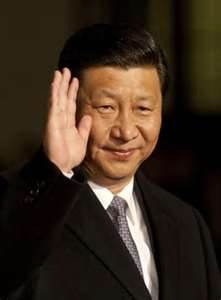
The West knows little about new CCP General Secretary Xi Jinping since tradition dictates that aspiring officials lay low and tow the Party line while nurturing economic growth and putting out the fires of social unrest. The ‘school of hard knocks’ coupled with his pedigree served Mr Xi well, helping to fuel his quiet and slow but sure rise up the ranks of the Party structure.
Xi Zhongxun, his legendary guerrilla leader father’s purge in the early 1960s leading to persecution and imprisonment during the Cultural Revolution, spelled disaster for the Xi junior. He spent much of his teens through early 20s toiling in the parched fields in a remote village, spending most of that time in a ‘yaodong’, cave-dwellings typical of desolate and hilly northwest China. His applications for Party membership were rejected nine times due to his father’s political predicaments. He finally acceded in 1974 and later earned a chemistry degree at prestigious Tsinghua University.
In a rare magazine interview in 2001, he mused, “Knives are sharpened on the stone. People are refined through hardship. Whenever I later encountered trouble, I’d just think of how hard it had been to get things done back then and then nothing would seem difficult.”
Following the death of Chairman Mao in 1976 and the rehabilitation of his father, Xi served as secretary to then Defense Minister Geng Biao, one of his father’s closest comrades. His ties to the PLA and his father’s influence after death may explain his simultaneous promotion to the chairmanship of the Central Military Commission without having to endure the two year or more delays by his predecessors.
Eschewing a cushy bureaucratic career in the Party’s higher echelons, Xi chose to work from the ground up starting in the rural town of Zhengding, Hebei. There, he took advantage of opportunities to create jobs and generate revenue and owing in part to his family background, Mr Xi was able to garner support for local projects from the higher-ups. A few years later, with several years of experience at the grassroots under his belt and given a boost from his father, Mr Xi was named a deputy mayor of Xiamen, which at the time was in its heydays as one of the original four Special Economic Zones.
Serving there and in other capacities throughout the province, Mr Xi steadily climbed the ladder to become provincial governor in 1999. In the lobby of the provincial headquarters, he hung a big banner blazed with the words “Get It Done”. During his 17 year career in Fujian, Xi built up a reputation for frugal government, strong support of private enterprise, and fighting corruption all the while attracting huge amounts of foreign and Taiwanese investment.
From 2002 to 2007, he assumed the highest offices in neighbouring Zhejiang Province, China’s biggest hotbed of private business and a lively civil society. In 2007, he was dispatched to clean-up Shanghai following the corruption scandal of Party boss Chen Liangyu involving the misuse of the city’s social security funds. A year later, he took charge of security at the Beijing Olympics and helped manage relations with Hong Kong.
Enigmatic in his political and policy leanings, 22 years of reform in Fujian and Zhejiang speak well for Mr Xi’s continued support of private business even as SOEs continue to benefit from numerous advantages such as access to cheaper capital and land. In this respect, it is significant to note that under Hu Jintao’s watch, SOEs’ share of total industrial and services declined dramatically from 48% in 2000 to about 27% last year. But for Mr Xi to rejuvenate the private sector, he must boldly introduce measures to encourage competition and whittle away the entrenched interests of state monopolies, a tall order even for a man of his background and experience.
Speaking at a conference recently, Mr Li Jian’ge, Chairman of China International Capital Group and a vice-chairman of state-owned Central Huijin Investment Co., suggested that Xi Jinping will unveil new market-oriented reforms within a year focusing on reducing government intervention ranging from excessive regulation to rigid price controls and breaking up or at least curbing the power of state monopolies. Mr Li, who is also a member of the CPPCC that met recently with major private businessmen, said, “Expectations are high…We must give private businesses equal treatment”.
Mr Li was a fellow at the Development Research Center under the State Council. Last February, the Center had collaborated with the World Bank to produce the influential ‘China 2030’ report that points the way for sustained growth and avoiding the so-called ‘middle-income trap’. The report explicitly called for the overhauling of SOEs, SOE banks, land laws, labour and financial markets, while promoting competition and reducing government intervention. The lengthy report was said to have been endorsed by incoming Premier Li Keqiang.
0 Comments
Trackbacks/Pingbacks