
The Lai Changxing Saga
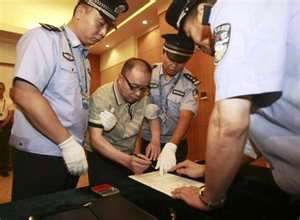
Last week’s life-sentencing of Lai Changxing, China’s most prolific smuggler and criminal mastermind, ended a 12 year extradition battle between China and Canada that saw him exhaust all legal channels in trying to stay in Canada. Dubbed a ‘robber baron’, ‘Robin Hood’, and ‘Great Gatsby’ by some in the Western press, we should recall his crimes, lest people paint him as a tragic-hero caught up in the intricate web of local corruption in China.
Diminutive in stature and growing up destitute with little formal education, Lai became a ‘big man’ in Xiamen, engaging in illicit activities on the one hand and donating generously to local charities, projects, and causes on the other. Using his Yuanhua Group (Fairwell Group in English) as a front during the boom days of the Xiamen Special Economic Zone, Lai ran an extensive smuggling operation, protected from investigation and prosecution through the masterful cultivation of local and central officials via bribes and vice.
Expending a tiny fraction of his ill-gotten gain, he managed to have officials look the other way and even act as his scouts. At the height of his power, he built a seven-storey ‘red mansion’ especially for them offering gifts, booze, and girls. The more prominent big-wigs to be dragged down include Ji Shengde, a high-ranking People’s Liberation Army general and son of former Secretary-General of the State Council Ji Pengfei, Li Jizhou, a top cop, and Hu Ganlu, in charge of immigration.
Over a five year period before the warrants went out for his arrest, Mr Lai’s syndicate smuggled everything from cigarettes and luxury cars to commodities such as refined oil, chemicals and textiles worth US$4.35 billion, evading more than US$2.22 billion in duties and other charges, the Xiamen Intermediate People’s Court announced at his sentencing. Some analysts believe his ring may have moved as much as $10 billion in contraband to avoid $3.6 billion in taxes and fees.
In the summer of 1999, Lai was tipped off that tough corruption and crime buster Premier Zhu Rongji was out to nab him. He immediately boarded a boat fleeing to Hong Kong where he had emigrated years earlier. In a matter of days, he and his family landed in Vancouver where he lived a life of luxury for 12 years in a $1 million-dollar home and sent his kids to private schools. Most galling to many Chinese was that, while exploiting the Canadian judicial system to the max, he could go gambling at Canadian casinos and was even granted a permit to work as a consultant for a Vancouver real-estate company.
Over the past decade, the Chinese government had made repeated requests for his extradition, including a letter from President Jiang Zemin in 2001 vowing that he would not be executed. But, his case languished in Canadian courts until a Vancouver federal court finally ruled that he should not be considered a refugee and be deported. His life-sentence in China led the Canadian government to express its approval, stating that China had indeed lived up to its assurances.