
China’s First Aircraft Carrier Liaoning Handed to PLA Navy
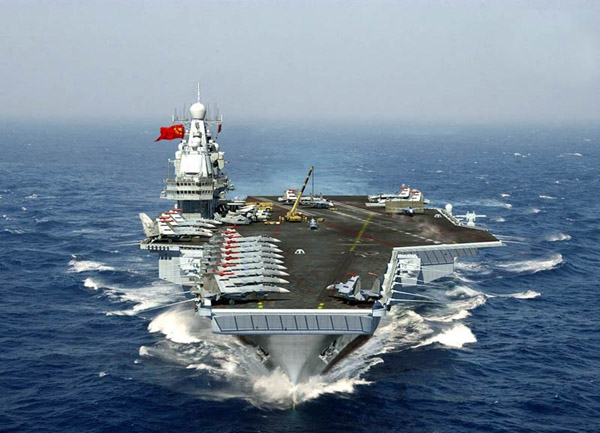
The Liaoning, named after the northeast Chinese province where the unfinished former Soviet carrier Varyag was completely revamped and refitted, was formally handed over to the Chinese navy yesterday at a gala cermony in Dalian with President Hu Jintao and Premier Wen Jiabao presiding. The Liaoning will be used mainly for training over the next few couple years as China builds its new class of entirely domestically designed and fitted carriers. Military experts say China could have three carriers built and in service within a decade and as many as six for a full fleet.
http://www.chinadaily.com.cn/china/2012-09/26/content_15782885.htm
Liaoning’s specifications and history of its construction and sea trails can be found here: http://www.jeffhead.com/worldwideaircraftcarriers/varyag.htm
The Liaoning at sea:
 Computer generated graphics of China’s new class of aircraft carriers supposed (or will soon be) under construction: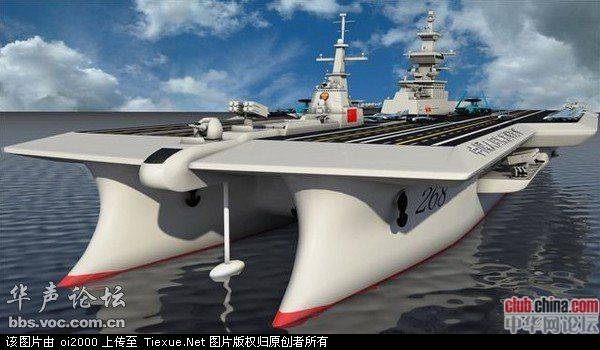
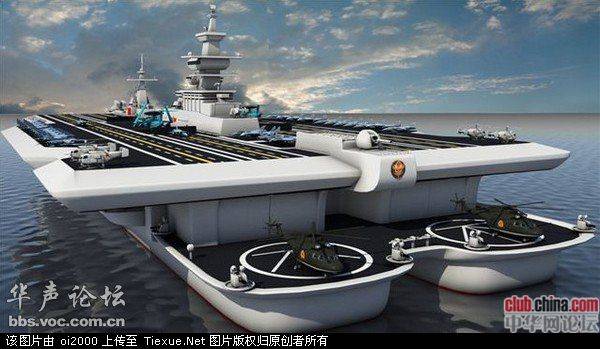 Even a giant submarine aircraft carrier proposed on Sina.com’s military blog:
 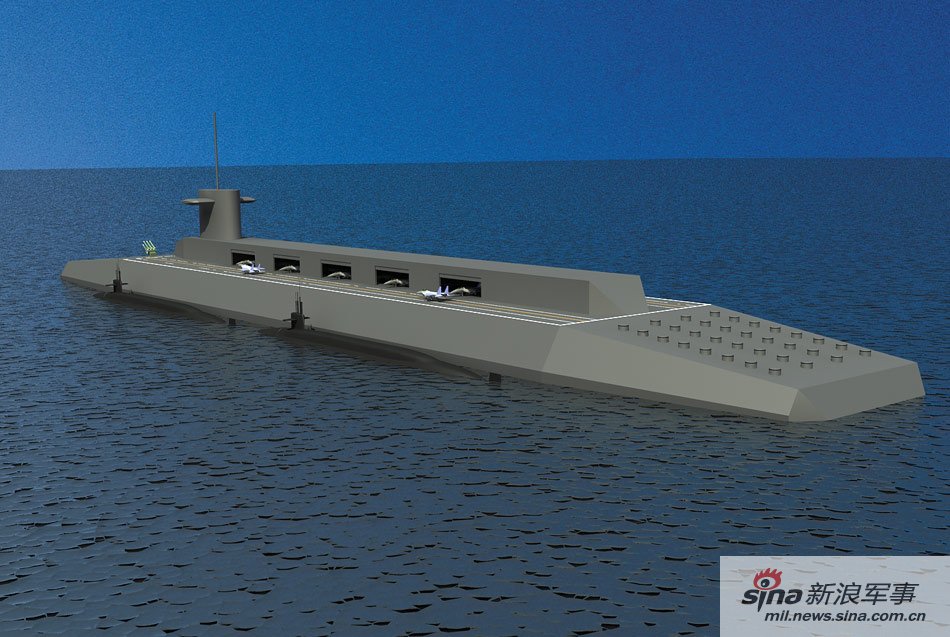 Aircraft carriers around the world:
 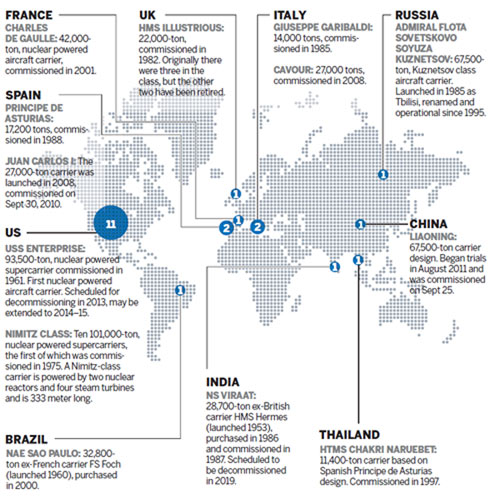 – China Daily
Photo Gallery: Taiwanese and Japanese Boats Around the Diaoyu Islands
Here is a photo gallery sent by a friend on the faceoff between Taiwanese fishing boats, the Taiwanese Coast Guard and the Japanese Coast Guard. There was a lot of spraying of water cannons but thankfully no injuries on either side. Expect more Taiwanese and mainland fishing boats to venture into nearby waters. The mainland Chinese government has also sent surveillance ships.
http://news.ifeng.com/photo/hdnews/detail_2012_09/25/17879807_0.shtml#p=11
-Hong Kong Phoenix TV
Carney: Go West Canadian Companies – to China
Governor Carney is saying this as the American Chamber of Commerce in China (Amcham) welcomes China’s recent market opening measures in aviation, delivery services, securities, insurance, shale gas, to name a few sectors. Canadian expertise, technology, and capital in many of these areas are leading so Canadians better get with it!
Visit: www.amchamchina.org
Bank of Canada Governor Mark Carney says even a slowing China offers vast opportunities to Canadian companies.
China’s economy is expected to grow about 7.5 per cent this year, or half of what it was in 2007. But even at that rate, the country is injecting $600-billion (U.S.) into the global economy – twice what the United States contributes and roughly the same as it did five years ago, Mr. Carney said Monday in Ottawa at a conference on Asia.
“There’s a huge amount of growth that’s going to come here on virtually any trajectory,” Mr. Carney said at a panel discussion at the conference, organized by the Canadian Council of Chief Executives. “There is sustained opportunity. These are relentless forces.”
Mr. Carney warned that Canadian multinationals are typically half as engaged in Asia as their counterparts in other Group of Seven countries. And he urged Canadian companies to “reorient” their activities toward China.
It’s not too late, Mr. Carney suggested. The enormous needs of China’s rapidly growing middle class, its appreciating currency and the country’s ongoing transition to a more market-based financial services sector presents enormous opportunities for Canadian companies, he said.
“Getting a large share, or more than our share, of these opportunities is readily achievable,” he pointed out.
Food presents a major opening for Canadian exporters, according to Mr. Carney. That’s because GDP per capita in China and other Asian countries is at an “inflection point” where protein consumption is now poised to grow rapidly, he said.
(Financial system liberalization) will open new opportunities for Canadian companies in areas such as pensions, insurance and allocating credit to companies – areas where Canada has expertise inside and outside government.
– Globe and Mail
China’s Skyscrapers to Pass US in 5 Years
China will surpass the US with most number of skyscrapers, or buildings more than 152 metres in height, in the next five years, according to a report. China will have 802 such buildings by 2017, compared to 539 in the US. And in 10 years, the number of skyscrapers in China will reach 1,318, compared to 563 in the US. Currently, the US tops the world with 533 skyscrapers, compared to 470 in China, the research organization MotianCity said in a report. There are 332 such buildings under construction in China, with an additional 516 in the pipeline, the Shanghai Daily reported Monday. In contrast, only six skyscrapers are under construction in the US at present, with another 24 in the planning stage. The skyscrapers are set to rise not only in major cities like Shanghai and Beijing but also in second and third-tier cities.
– IANS
More Than a Billion Mobile Phones in China
China’s Ministry of Industry and Information Technology (MIIT) reports that as of the end of August, there were 1.07 billion mobile phone users in China, and 192 million of them (about 18 percent) are 3G users. But, as we’ve heard from lots of sources, those numbers are growing fast. MIIT says that in total, China has gained more than 64 million 3G subscribers so far this year.
Needless to say that growth has been good to everybody’s bottom lines; MIIT says that the industry has taken in more than 706 billion RMB ($112 billion) in revenue, which is up 9 percent compared to the first eight months of last year. Amazingly, although mobile phones make up for more than 70 percent of telecom revenue at this point, MIIT says that revenue from fixed line telephones grew a little bit even as those services lost a little ground in terms of their percentage of overall telecom revenue.
The lesson here: phones in China simply cannot be stopped. Apparently even fixed-line phones.
– Tech in Asia
America’s Love-Hate for China
A couple weeks ago, I put up a post on Washington-based Pew Research Center’s survey of Indian attitudes toward their country’s economic direction and other countries, notably China. Last week, Pew came out with its annual study of American attitudes about China and the Chinese. The poll, done in collaboration with a number of US and Chinese think-tanks, interviewed a thousand ordinary Americans as well as over 300 foreign affairs specialists last May.
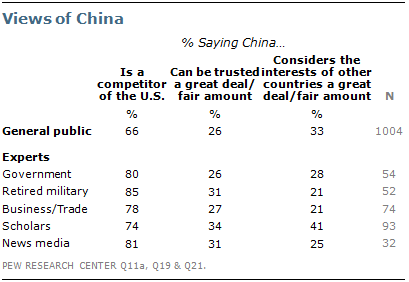
The results, similar to previous efforts, showed persistent American love-hate opinions of China. The good thing is that 2/3 of Americans see the bilateral relationship as good and China as a formidable competitor rather than a sworn enemy (15%). This perception is particularly widespread among college graduates (78%) and those with some college experience (67%). It is similarly strong among experts (nearly 80%), with the rest going a step further to say that China is an actual partner. Virtually no experts labeled China a foe.
This compares with a China Daily/Gallup poll of over 2000 US citizens conducted in late 2011 that found Americans nearly split in their overall view of China – 42% favorable and 44% not, with the rest expressing no opinion. Similarly, 45% saw China’s growing economy as a good thing while 48% said the opposite. Despite the mixed results, the vast majority (71%) acknowledged that strong relations between the two countries are important and 81% saw a close relationship with China as a “good thing”.
At the same time however, in the Pew survey, 68% of the general public felt China could not be trusted with only 1/4 (26%) holding the contrarian view. In the untrustworthy column, China shared low rankings with the US’s Middle-Eastern allies like Saudi Arabia but faired much better than US partner-in-anti-terror Pakistan. Mistrust also featured large in US expert opinion (65%) of China. Significantly, however, young Americans under 30 tended to view China in a more positive light than older, with 43% saying China is trustworthy.
It is interesting to contrast this with Chinese views of America and Americans. Also late last year, China Daily and Horizon Research Group surveyed 1,464 Chinese residents in seven major cities to find about 50% with a good impression of the US, a 15% decline from 2009. But, similar to the Pew poll, over 90% said China-US relations are important.
At the same time, more than 2/3 saw the US as the main culprit in bilateral problems but 10% more people than the previous year saw both countries as being responsible. The respondents used 5 key words/phrases to describe America’s national image: hegemony, developed economy, China-US relations, freedom and democracy, and war and military. More than 70% said American culture has a positive impact on China and high-tech products, movies, universities and sports defined American culture.
Commenting on the results, Ms Xiong Lei, a former Xinhua News Agency senior editor and panelist on a China Daily’s Digest China segment discussing Sino-US ties, reflected, “Especially Chinese younger generations born after the 1980s and 1990s can be more confident in handling the relationships between the two countries than the older generations, because they grew up in a stronger economy. With this confidence, they can be more independent in thinking”.
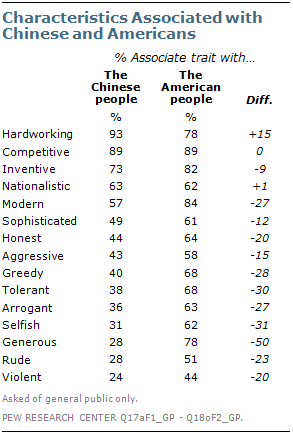
Meanwhile, in the PEW study, at least 7 in 10 Americans ascribed to Chinese people those very attributes they take pride in themselves – hardworking (93%), competitive (89%), and inventive (73%). They were also less inclined to attribute certain negative traits to the Chinese people than to themselves – aggressiveness (43%), greed (40%), arrogance (36%), selfishness (31%), rudeness (28%), and violence (24%).
Max Fisher, a columnist for the Atlantic Monthly wrote, “‘They are quiet, peaceful, tractable, free from drunkenness, and they are as industrious as the day is long,” Mark Twain wrote in his 1871 book Roughing It reinforcing some of the same racial stereotypes – positive, yes, but stereotypes nonetheless – that may still linger in American perceptions of Chinese today”.
Satellite Babies
The custom of temporarily boarding young children with overseas relatives — a strategy that helps newcomers cope with the stress of migration — is not limited to the Chinese, but is also common among South Asian, African and Caribbean immigrants.
However, according to the York University study, the patterns of parent-child separation including timing and length of separation are distinct among those communities.
– Toronto Star
Car-free Day in Guangzhou
Most government vehicles were left in garages in Guangzhou on Saturday, the World Car Free Day, in a national campaign to promote an eco-friendly way of living in China.
This year, 151 cities in China joined in the campaign, according to the Ministry of Housing and Urban-Rural Development, one of the main promoters of the activity. Among them, South China’s metropolis Guangzhou attracted much attention as it allowed only 10 percent of vehicles owned by government departments and institutions to be used on Saturday, local traffic administration office said on Friday.
In addition, private vehicles not involved in emergencies were diverted from parts of downtown between 7 am and 7 pm on Saturday.
– China Daily
China’s Plan to Become High-Tech Powerhouse
China aims to become a world technological power by 2049 and strives to be a leading nation in innovation and scientific development, according to a government document released on Sunday.
The document, released by the Communist Party of China Central Committee and the State Council, or the Cabinet, namely opinions on “deepening technological system reform and accelerating national innovation system construction,” sets the goal for the country to be “in the ranks of innovative nations” by 2020.
The document urged efforts to deepen the reform of scientific and technological system and step up the building of a national innovative system so to lay a foundation for the country to become a technological power when celebrating the centennial anniversary of New China in 2049.
China’s R&D funds nationwide should reach 2.2 percent of GDP during the 12th Five-Year Plan (2011-2015) period, and more than 2.5 percent by 2020, it said.
The average R&D input for large- and medium-sized industrial enterprises should increase to 1.5 percent of their revenues during 2011-2015 period, the document said.
For every 10,000 employees, there should be at least 43 R&D personnel each year, it said.
The development of strategic emerging industries, such as energy preservation and environmental protection, new-generation information technology, biology, advanced equipment manufacturing, new energy and material as well as green vehicles, should be accelerated, it said.
The gross value added of the strategic emerging industries should make up about 8 percent of GDP by 2015 and 15 percent of GDP by 2020, the document said.
The nation planned to nurture several leading assemblages of innovative companies and small and medium-sized technological enterprises during 2011-2015 period, it said.
The systemic reform of the scientific research institutes and institutions of higher education will also be deepened in the period to strengthen their ability to innovate and improve their services, the document said.
The construction of potential first rate scientific research institutes and universities will be facilitated in the five-year period, it said.
It also encouraged the scientific research institutes and universities to cooperate with key companies of industries on setting up platforms for R&D and forging federations for technological innovation.
The support for the innovative activities of the non-state companies should be expanded and the fiscal and financial support for the small and medium-sized companies and micro-businesses would be increased, according to the document.
Major breakthroughs of key technologies should be materialized in sectors including electronic information, energy and environment protection, biological medicine and advanced manufacturing, it said.
And technological innovation should be made in industries that were related to people’s livelihoods, such as health, food and drug safety, and disaster relief, the document said.
It called for an enhanced system to intergrade the technologies for military use and those for civilian purposes.
The document said the nation’s technological plan would be more open to the outside world in terms of cooperation, and international academic institutions and multinational companies would be encouraged to set up R&D centers.
– Xinhua
Aircraft Carrier Handed Over to Chinese Navy

China’s first aircraft carrier is berthed at Dalian port on September 5. China’s …
China’s first aircraft carrier was handed over Sunday to the navy of the People’s Liberation Army, state press said, amid rising tensions over disputed waters in the East and South China Seas.
The handover ceremony of the 300-metre (990-foot) ship, a former Soviet carrier called the Varyag, took place in northeast China’s port of Dalian after a lengthy refitting by a Chinese shipbuilder, the Global Times reported.
During the handover ceremony the aircraft carrier raised the Chinese national flag on its mast, the PLA flag on its bow and the navy’s colours on its stern, the short online report said.
A ceremony to place the ship into active service would be held sometime in the future, the paper said without elaboration.
The announcement comes at a time of heightened tensions over maritime disputes in the Asia-Pacific region, where China’s growing assertiveness has put it on a collision course with Japan, Vietnam and the Philippines.
China also Sunday postponed a ceremony marking the 40th anniversary of the establishment of diplomatic ties with Japan, due to a noisy territorial dispute with Tokyo over the Diaoyu Islands, known in Japanese as Senkaku.
– AFP