
Li Keqiang and China’s Much-Needed Reforms
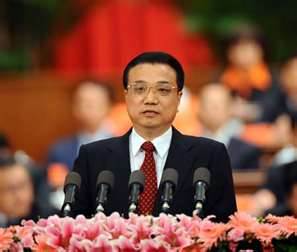
Predecessors Zhu Rongji and Wen Jiabao are hard acts to follow for Premier-in-waiting Li Keqiang. Mr Li will have to perform the double feat of taking on entrenched SOEs while maintaining high growth as China grapples with more sustainable development shifting from an export-led strategy to domestic consumption. Reforms to create a bigger middle class will be critical in avoiding the so-called ‘middle income trap’ that has thwarted the aspirations of many developing countries.
Mr Li’s background and training in law and economics, in contrast to the engineers before him, bode well for reform. Despite being immersed in the intellectual and political fervor that enveloped Peking University during the heady 1980s, as President of the Student Council, Mr Li shied away from student radicalization that eventually contributed to the tragedy on Tiananmen Square. Graduating with a law degree, Mr Li went straight to the Communist Youth League Central Committee where he came under the wing of Hu Jintao to eventually take over as Party Secretary. During that time, he also obtained a MA in law and studied part-time toward a doctorate in economics again at his alma mater.
In 1998, he was dispatched to Henan, then one of the poorest provinces in central China plagued by an outbreak of AIDS that had infected tens of thousands of peasants who contracted HIV through dirty syringes selling blood to underground blood-buying rings. Once the central government acknowledged the extent of the epidemic, Mr Li was instrumental in channeling government assistance to victims and publically urging compassion toward sufferers. Six years later, he was transferred to head up rust-belt Liaoning, serving as Party Secretary until 2007. Under his watch, the two provinces grew faster than 10% annually. So, it was not surprising that he was catapulted to the pinnacle of power, the Standing Committee of the Politburo, at the 17th Party Congress that year.
Since his appointment as First Vice-Premier, Mr Li has made modest inroads in his portfolios including public health, food safety, and housing which have been stricken by national scandals and volatile price rises. In past speeches, Mr Li has spoken extensively on unsustainable rates of government-led investment, the troubled export sector following the global financial and European debt crises, difficulties in stimulating domestic consumption, and an underdeveloped service sector, just to name the more important issues. Most recently, Mr Li’s remarks on SOE and tax reform were published on a government website: “At present, reform has encountered a ‘fortress area’ and a ‘deep water area’ (formidable obstacles). We must overcome difficulties and get rid of all institutional obstacles that hinder scientific development”.
Schooled in the rule of law and economic development, analysts believe Mr Li also has his eye on yawning income inequality, the wide gap between the cities and the countryside, and the numerous problems accompanying China’s rapid urbanization. The OECD projects that by 2030, as many as 300 million more farmers will have moved into cities to join the already nearly 700 million urbanites. Urbanization will continue to drive China’s high rates of investment but the key going forward is encouraging more private and foreign involvement.
A recent Moody’s report emphasized that China must accelerate reforms to sustain economic growth – heightened market competition, overhauling SOEs, and promoting more certainty and transparency in rules and regulations. Overcapacity exists in a number of industries that raise risks for China’s largest SOE banks. Moody’s judges Chinese bank asset quality as ‘negative’ over the next 12-18 months. Chinese total bank assets are now worth 240% of GDP, substantially higher than most major emerging markets.
Rebalancing China’s economy will require stiff face-offs with provincial governments and SOEs that have reaped windfalls from the existing system. While core state monopolies in the oil and gas sector and regional and national power grids will not be stormed any time soon, the central government recently announced measures to dent the power of SOEs in non-strategic sectors such as telecom and manufacturing. But, China will need an iron-fisted reformer of Mr Zhu Rongji’s stature and determination to deal powerful blows to deep-rooted interests.
Will Mr Li backed by Mr Xi be that man?
0 Comments
Trackbacks/Pingbacks